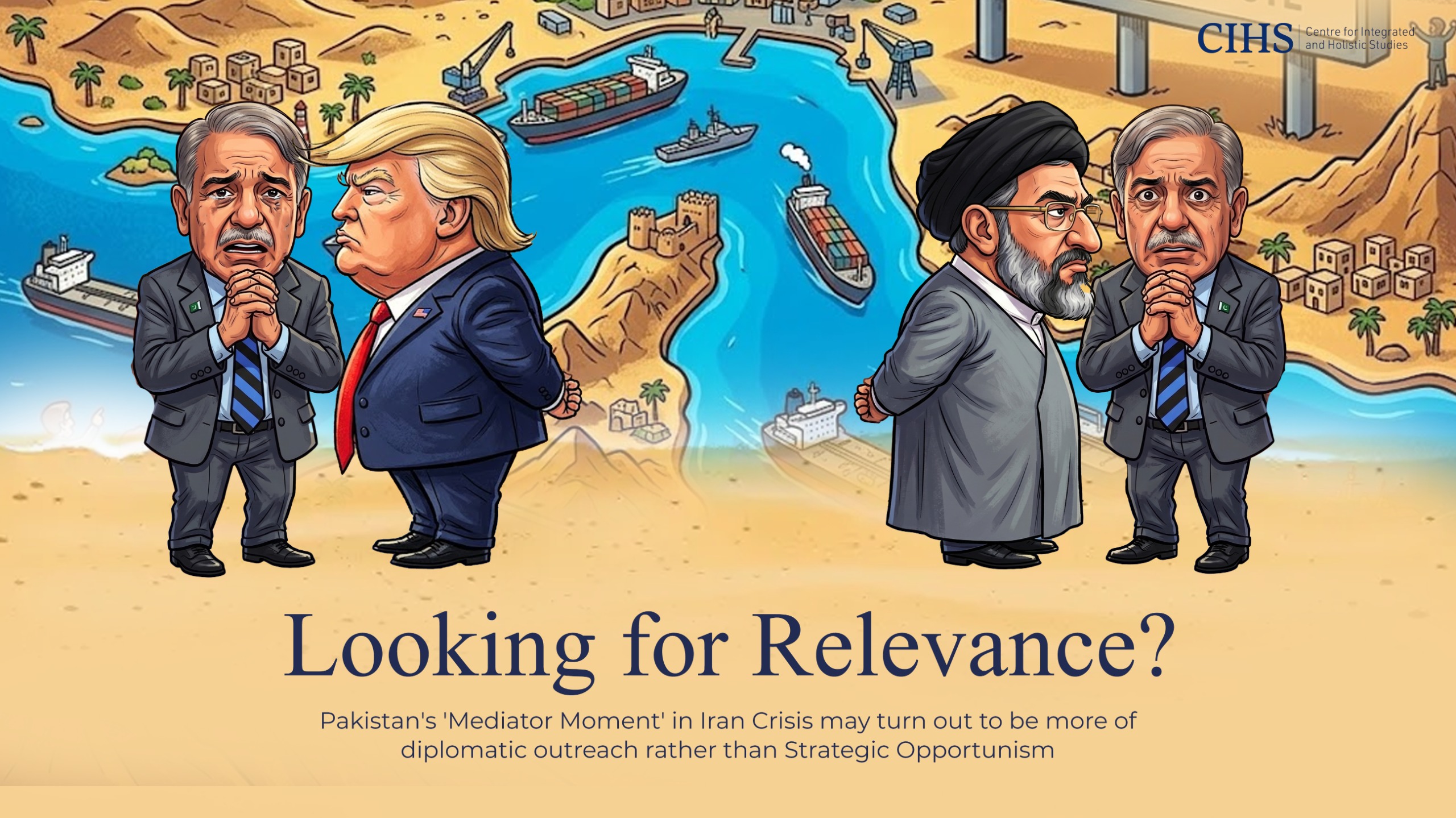


Pakistan’s ‘Mediator Moment’ in Iran Crisis may turn out to be more of diplomatic outreach rather than Strategic Opportunism.
N. C. Bipindra
Pakistan’s most visible foreign policy gambits in recent years are its attempts to position as a mediator in the conflict between US, Israel and Iran.
Pakistan has stepped forward to host talks, relay messages and project itself as a bridge between adversaries as tensions between US and Iran oscillate between ceasefire diplomacy and brinkmanship.
Yet, beneath optics of shuttle diplomacy lies a more complex reality. Pakistan has limited credibility, constrained leverage and competing internal and external pressures.
Optics versus Substance: Pak’s Mediation limits
In recent days, Pakistan has actively facilitated dialogue between Washington DC and Tehran. It is even prepared to host rounds of negotiations. But, the substance of this engagement remains uncertain.
Iran has shown hesitation in committing to talks in Islamabad. At critical moments, it has not confirmed participation. This hesitation reflects a broader scepticism. Mediation requires trust from both sides and Pakistan’s track record does not necessarily inspire it.
Islamabad has maintained relations with Tehran and avoided overt alignment with Israel or US military frameworks. Its strategic dependence on Gulf allies especially Saudi Arabia raises questions about neutrality. The result is a paradox. Pakistan is visible but not indispensable.
Trump Factor: Mimicry as Strategy
One most striking features of Pakistan’s current posture is its alignment with Trump’s transactional diplomacy style.
Islamabad has reportedly tailored its outreach to appeal to Trump’s preferences. It has offered cooperation on counter-terrorism, economic deals and even taken recourse to public praise.
This approach has yielded short-term gains. Pakistan has secured a seat at the diplomatic table. Some stakeholders have even described Islamabad as a “central mediator.”
Yet, such gains are fragile. They hinge on personal rapport rather than institutional trust. This makes Pakistan’s role vulnerable to shifts in US policy or leadership.
More critically, aligning too close with Trump risks alienating other actors particularly Iran. Tehran remains wary of US pressure tactics and sceptical of intermediaries perceived as extensions of Washington.
OIC Platform: Visibility Not Influence
Pakistan has leveraged Organisation of Islamic Cooperation (OIC) to project diplomatic relevance. The grouping has publicly acknowledged Pakistan’s “effective role” in de-escalation efforts.
However, OIC’s structural limitations undermine its utility. Deep divisions within Muslim world especially between Sunni-majority states like Saudi Arabia and Shia-led Iran limit the organisation’s capacity to act as a unified diplomatic bloc.
These internal fractures mean that Pakistan’s use of OIC serves more as a signalling tool than a mechanism for tangible conflict resolution. In effect, OIC amplifies Pakistan’s voice but does not necessarily enhance its negotiating power.
Asim Munir eclipses elected govt
Another defining feature of Pakistan’s mediation bid is the growing prominence of Army chief Asim Munir. Reports suggest that Munir has cultivated direct ties with US leadership even earning personal praise from President Trump.
This dynamic underscores a familiar pattern in Pakistan’s governance. The military is dominant in foreign and security policy. Prime Minister Shehbaz Sharif while publicly leading diplomatic outreach, appears overshadowed by army chief’s influence.
Such a configuration carries risks. While military backing can lend coherence and decisiveness, it also complicates perceptions of Pakistan as a neutral mediator.
For Iran and other regional actors, prominence of the military, given its historical alignments, may reinforce doubts about Islamabad’s impartiality.
Navigating Sunni–Shia Fault Lines
Pakistan’s mediation attempt is further complicated by its need to balance Sunni–Shia dynamics. The country has longstanding ties with Saudi Arabia, including defence commitments while sharing a border and cultural links with Iran.
This dual alignment creates structural constraints. Supporting Saudi Arabia too overtly risks alienating Iran. Leaning toward Tehran could jeopardise economic and financial support from Sunni-majority Gulf states.
The challenge is not merely diplomatic but existential, given Pakistan’s economic vulnerabilities and reliance on Gulf remittances and energy supplies.
Domestically, the stakes are equally high. Sectarian tensions within Pakistan could be inflamed by perceptions of bias in the Iran conflict, adding another layer of complexity to its external posture.
Pakistan’s Credibility Deficit
Despite its proactive diplomacy, Pakistan’s credibility as a mediator remains contested. Critics, including former US officials such as ex-adviser to Secretary of Defence Col Douglas Macgregor (Retd), have dismissed its role as unrealistic or overstated.
Even where Pakistan has achieved visibility, questions persist about its capacity to deliver outcomes. The gap between hosting talks and shaping agreements is significant. Islamabad has yet to demonstrate the leverage needed to bridge it.
At the same time, some analysts argue that Pakistan’s emergence as an interlocutor reflects a broader shift in global diplomacy, where middle powers exploit geopolitical flux to carve out roles.
From this perspective, Pakistan’s mediation bid is less about immediate success and more about long-term positioning.
Crisis at Home, Ambition Abroad
Pakistan’s diplomatic activism also contrasts sharply with its domestic challenges. Iran conflict has triggered economic disruptions, including energy shortages and inflation, underscoring Islamabad’s vulnerability.
These internal pressures raise an important question. Is mediation a strategic necessity or a diversionary tactic? Pakistan may be seeking to offset domestic instability and enhance its international standing by projecting itself as a peacemaker.
Without requisite economic and institutional strength, Pakistan’s ambitions to turn a key mediator may not work.
Mediate or Messenge?
Pakistan’s emerging posture in Iran crisis reflects a blend of opportunism, necessity and ambition. It has successfully inserted itself into high-level diplomatic processes.
Islamabad has leveraged relationships with both Western and Muslim-world actors. Yet, its role remains constrained by credibility deficit, structural dependencies and internal contradictions.
At its core, Pakistan’s mediation effort may be better understood not as a decisive diplomatic intervention but as a bid for relevance in a rapidly shifting geopolitical landscape.
Whether it evolves into a genuine broker of peace or remains a peripheral messenger will depend on its ability to translate visibility into trust and presence into influence.
(Author is Chairman, Law and Society Alliance, a New Delhi-based think tank, and guest columnist with CIHS)

