
Prof. Kedar Naik
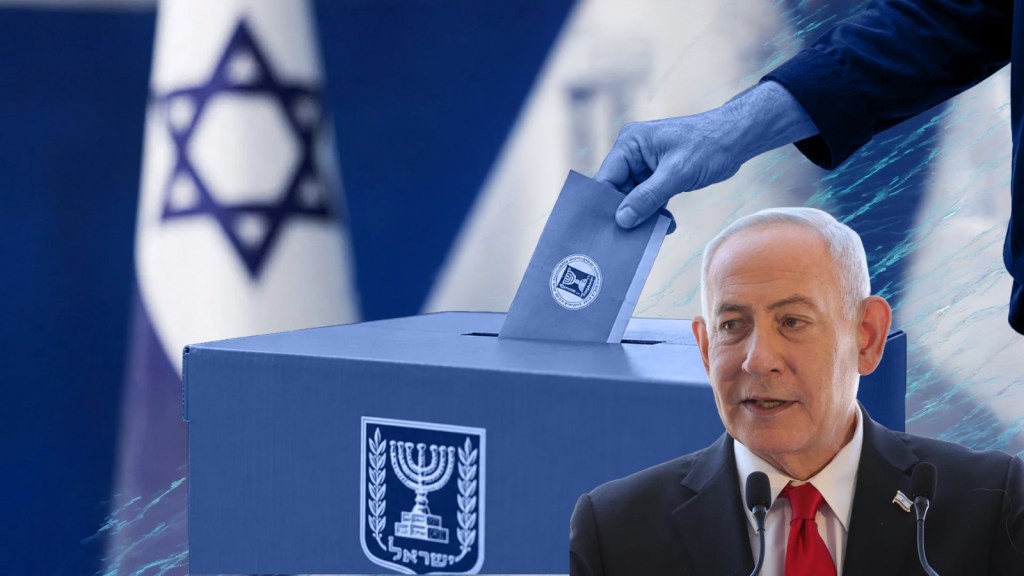
Israel’s 2026 election has produced a familiar result: an intensely engaged electorate, a divided parliament and no straightforward route to government. Beneath the negotiations over who becomes prime minister lies a harder question. Can Israel preserve its Jewish civilisational identity while maintaining common citizenship, shared obligations and institutions capable of governing?
I approach that question as an Indian conservative, shaped by tradition, dharma, rashtra and the need for prudent change. A nation inherits memories and obligations that cannot be reduced to a contract among individual voters. But inheritance alone does not keep a state together. Its institutions must make room for disagreement, distribute burdens fairly and allow governments to act. When they reward communal bargaining at the expense of common responsibility, national solidarity begins to fray.
The election of 27 October, with results formally approved on 4 November, followed years of strain: the dispute over judicial reform, the trauma of 7 October 2023, prolonged regional warfare and mounting anger over exemptions from military service. Turnout approached 78 per cent. That level of participation speaks to the vitality of Israeli democracy. The difficulty of turning those votes into a government speaks to its weaknesses.
The arithmetic of a divided nation
Netanyahu’s right and religious bloc won 53 seats in the 120-member Knesset, eight short of a majority. Likud remained the largest party with 27 seats. Shas and United Torah Judaism together secured 13, down from 18 in 2022, while Otzma Yehudit and Religious Zionism accounted for another 13.
The Zionist opposition won 48 seats. Gadi Eisenkot’s Yashar took 21; Naftali Bennett and Yair Lapid’s Beyachad list won 12; the Democrats, bringing together Labour and Meretz, secured eight; and Avigdor Liberman’s Yisrael Beytenu won seven. Arab-led parties took the remaining 19 seats: 11 for the Joint List and eight for Mansour Abbas’s Ra’am.
The opposition and Arab-led parties therefore possess 67 seats between them. Yet an arithmetical majority is not necessarily a workable political majority. Parties may agree that Netanyahu should leave office while disagreeing profoundly over the state they would govern together.
For an Indian conservative, the distinction between Ra’am and the Joint List matters. Abbas has pursued a pragmatic strategy of working within Israel’s political order to secure policing, services and investment for Arab communities. The inclusion of Jewish former police commander Yoav Segalovitz on Ra’am’s list reinforces that approach. Its significance lies in the possibility of civic integration without requiring Arab citizens to abandon their identity.
The Joint List brings together different traditions, including Hadash, Ta’al and Balad. Its opposition to Zionism, particularly Balad’s demand for a state of all its citizens, raises a different question for parties committed to Israel’s Jewish national character. External parliamentary support from such a list may make a minority government possible, but it leaves unresolved how far those parties can agree on security policy and the purposes of the state.
There are three concerns here. The first is strategic freedom. A government dependent on outside support may struggle to sustain military operations or defence budgets if its indispensable supporters reject those policies. That danger is especially serious during war, when decisions cannot always wait for renewed coalition bargaining. It is a risk arising from political dependence, rather than an inevitable consequence of Arab participation.
The second is trust. If leaders rule out reliance on a party during an election and then depend on it immediately afterwards, voters are entitled to ask what their promises meant. The experience of the Bennett–Lapid government showed how vulnerable a coalition can become when its members’ understandings of its legitimacy diverge.
The third concern cuts in the other direction. A state cannot encourage Arab citizens to participate in elections and then treat their participation itself as suspect. Doing so alienates citizens who have chosen parliamentary politics and weakens those trying to build practical cooperation. A conservative defence of the nation should distinguish between legitimate disagreement, opposition to a government and rejection of the state’s continued existence.
My standard would be constitutional integration: welcome parties prepared to accept the state’s permanence, reject terrorism and work within a fair arrangement of rights and duties. At the same time, take seriously the risks of making executive authority depend on factions with which there is no basic agreement about the national order. Neither blanket exclusion nor unqualified dependence offers a durable answer.
When proportional seats produce disproportionate power
Israel’s electoral system helps turn these divisions into recurrent crises of government. All 120 Knesset members are elected through nationwide party lists in a single constituency. A list must cross a threshold of 3.25 per cent to receive representation. Voters choose a party, rather than an individual representative for their town or district.
The central problem is that proportionality in parliament can coexist with pronounced inequality in bargaining power. A small party whose votes are essential to a majority can demand concessions out of proportion to its electoral support. A much larger party may have little influence if nobody will govern with it.
Giovanni Sartori’s distinction between a party’s “coalition potential” and “blackmail potential” is useful here. Parties matter through their ability to enter a government or change the behaviour of other parties. In a closely divided Knesset, the capacity to withhold a handful of votes can be more valuable than a broad but politically isolated mandate.
This encourages parties to organise around tightly defined communities. Instead of negotiating broad compromises before the election, they can mobilise a committed constituency and bargain afterwards for budgets, ministries or exemptions. The national interest then emerges, if it emerges at all, from negotiations among parties whose first obligation is to their own supporters.
Accountability suffers too. Junior partners can claim credit for what they obtain while blaming the prime minister, coalition rivals or courts for failures. Collective cabinet responsibility becomes difficult to enforce when a partner’s threat to leave can bring down the government. Meanwhile, voters in a border town have no territorially elected MK whom they can directly reward or remove for neglecting local concerns. Parties may represent those interests, but the line of responsibility is indirect.
There is a further cost at the threshold. Votes for lists that narrowly fail to qualify receive no parliamentary representation. An arrangement designed to limit fragmentation can therefore leave substantial numbers of voters without seats, while the parties that qualify continue bargaining over the balance of power.
Still, proportional representation has a serious defence. Israel is a society of deep religious, ethnic and ideological differences. Its electoral system allows those differences to appear in parliament. Arend Lijphart’s work on consensus democracy reminds us that accommodation can be essential to stability in divided societies. A system that produces a clearer majority by excluding important communities might create other, more dangerous problems.
Nor is every reform an improvement. Gideon Rahat and Reuven Hazan’s analysis of Israel’s electoral system shows how the experiment with directly electing the prime minister encouraged voters to split their ballots, weakening large parties and making coalition government harder. The lesson is to reform carefully. Stronger constituency links or a mixed electoral arrangement deserve consideration, but electoral engineering cannot replace the willingness to compromise.
Demography without fatalism
Demography shapes Israel’s politics, but it is often made to explain too much. The claim that conservatives simply “outbred” Labour compresses a long political history into a fertility contest. The further claim that Arabs and Haredim are now doing the same to the Zionist mainstream overlooks the different trajectories of those communities.
Labour’s defeat in 1977 involved political mobilisation and a collapse of confidence in the governing establishment. Menachem Begin gave a voice to many Mizrahi Jews who felt patronised and excluded by an Ashkenazi-led order. The failures surrounding the 1973 war weakened Labour’s claim to competence. Religious attachment, class resentment and security politics helped build an enduring electoral realignment.
Yoav Peled’s ethno-class account, alongside Asher Arian and Michal Shamir’s research on electoral cleavages, helps explain why this alignment lasted. People did not merely inherit a party preference through birth. Parties organised their grievances and gave political expression to their identities.
The demographic evidence also requires care. Knesset research puts fertility in 2023 at about 3.00 children per Jewish woman and 2.81 per Muslim woman. These are broad categories with considerable internal variation; Muslim and Arab are not interchangeable labels. Nevertheless, the figures undermine the assumption that Arab fertility remains uniformly higher than Jewish fertility.
Haredi growth presents a distinct challenge. The community is young and expanding, while its educational institutions and patterns of male employment and military service remain different from those of much of Israeli society. Lee Cahaner and Gilad Malach’s statistical work is valuable precisely because it shows the relationship between population, schooling, work and household circumstances.
The question is not whether Haredi children are a burden. It is whether the institutions surrounding them equip them to participate in a modern economy and a common civic order. A growing population can strengthen a country. A growing system of permanent exemption can place increasing pressure on those who pay taxes, serve in the armed forces and sustain public services.
War fatigue and the departure of skilled Israelis add to that concern. Alex Weinreb’s demographic research points towards the importance of migration as well as births. If highly trained workers leave while the population increasingly depends on groups with limited access to core education and employment, the effects reach beyond electoral arithmetic. They affect the tax base, defence capacity and the institutions that make prosperity possible.
Yet there is opportunity here too. Israel retains a youthful population in an ageing developed world. Haredi participation in higher education has grown, and educational advancement among Arab citizens offers the prospect of a larger professional middle class. Neither community is frozen in the social arrangements defended by its political leadership.
The decline in the Haredi parties’ combined seat share in 2026 is itself a reminder that population growth does not mechanically produce electoral gains. Turnout, political loyalty and the decisions of voters outside a party’s core community also matter. Babies born today do not vote today, and their eventual preferences cannot simply be assumed.
Reuven Rivlin’s 2015 speech on Israel’s four tribes remains a useful way of understanding the problem. Secular, national-religious, Haredi and Arab Israelis often grow up in separate educational and social worlds. The task is to build enough common citizenship for those worlds to sustain a state together.
For someone who takes dharma seriously, rights and reciprocal obligations belong in the same conversation. Religious learning and communal continuity deserve respect. So do the sacrifices of soldiers, reservists and taxpayers. Integration into education, work and an appropriate framework of national or civic service should strengthen belonging, with the state also addressing discrimination and unequal access to opportunity.
Yoram Hazony’s account of nationalism through inherited loyalties can illuminate this task. A nation draws strength from commitments extending beyond individual choice. Those commitments must also reach beyond one’s own community. National solidarity becomes thin when everyone claims the protection of the whole while negotiating exceptions for themselves.
The limits of a noisy democracy
Israel’s public life is noisy, argumentative and often exhausting. Protests, contentious journalism and fierce electoral competition reveal a society unwilling to leave politics entirely to its leaders. That vitality deserves recognition.
But the volume of disagreement can exaggerate the breadth of strategic choice. My argument is that, among parties capable of leading a Zionist government, much of the competition takes place within a relatively narrow security consensus. Replacing Netanyahu would change leadership and could change institutions substantially. It would not necessarily produce an equally large change in the country’s approach to the Palestinian question or regional military power.
This is a judgement that needs to be tested issue by issue. Important parts of the right and centre remain sceptical of Palestinian sovereignty, and support for maintaining Israeli freedom of military action extends well beyond Netanyahu’s coalition. There is also broad acceptance of an economy built around markets, technology and international investment, although parties differ over distribution and the privileges of particular sectors.
Studies by Roi Zur and Ryan Bakker, and research on ideological cleavages among Israeli voters, provide ways to examine these patterns. They should not be stretched into a claim that every party has the same programme. Agreement on some economic or social questions can coexist with deep divisions over the conflict and the state’s constitutional character.
The battles over Netanyahu’s leadership, responsibility for 7 October, judicial authority and Haredi conscription are consequential. They concern accountability and the distribution of power and sacrifice. Calling them personal quarrels would miss what is at stake. Yet they can dominate political attention while the larger question of a sustainable relationship with the Palestinians remains unresolved.
Sammy Smooha’s description of Israel as an “ethnic democracy” captures one aspect of this tension: electoral participation and citizenship coexist with a state organised around the national purposes of its Jewish majority. Oren Yiftachel’s work on ethnocracy broadens the discussion to land and territorial control.
These arguments require a clear distinction between Arab citizens of Israel, who can vote in Knesset elections, and Palestinians in the occupied territories, who generally cannot. Israeli settlers vote for the parliament whose decisions shape the wider territorial order; Palestinians living under that order do not enjoy equivalent political power over it. Any serious assessment of democracy must confront that difference.
Jabotinsky’s 1923 essay “The Iron Wall” is relevant here. Alongside its argument for strength, it recognises that Palestinian Arabs possess a national attachment to their homeland. It also professes equal rights and rejects expulsion. A security doctrine that recognises another people’s enduring national aspirations must eventually address the political implications of that recognition.
Military superiority can protect a state and improve its negotiating position. It cannot, by itself, settle the question of how two peoples will live. If successive governments compete mainly over how to manage that question indefinitely, the intensity of electoral competition can coexist with strategic stasis.
The American relationship under strain
That stasis becomes more costly when support abroad is less secure. Robert Putnam’s account of diplomacy as a “two-level game” offers a useful explanation. Leaders negotiate with foreign governments while trying to retain the backing of constituencies at home. The American–Israeli relationship depends on political consent in both countries.
For decades, Israel benefited from broad support across American party lines, reinforced by strategic cooperation, domestic advocacy and substantial military assistance. The ten-year aid memorandum covering 2019–2028 envisaged $38 billion, subject to congressional appropriation. Wartime assistance has added to the relationship’s material importance.
Mearsheimer and Walt’s work on the Israel lobby places particular weight on organised advocacy. Their explanation remains contested, and lobbying should be considered alongside strategic interests, religious constituencies, public opinion and the choices of American leaders. No single mechanism explains the entire relationship.
What is increasingly difficult to assume is that the old political consensus will reproduce itself. Pew’s April 2026 survey found that 60 per cent of American adults viewed Israel unfavourably and 59 per cent had little or no confidence in Netanyahu. The generational dimension matters: future support cannot be inferred from the loyalties of older political elites.
The Iran war and resistance to open-ended Middle Eastern commitments have added pressure. Frustration over costs, strategic objectives and humanitarian consequences can reach voters in both parties, even when their reasons differ. Such attitudes create risks for military assistance and diplomatic protection. They do not, on their own, establish why any particular midterm contest was won or lost.
Netanyahu’s close identification with the American right may have brought immediate benefits, but a partnership so important to national security needs support beyond one party or leader. Younger conservatives may approach foreign commitments differently from their predecessors, just as younger Democrats may approach Israel differently from older Democrats.
An Israeli government will therefore need to engage sceptics across American politics. Personal rapport with the White House cannot replace relationships in Congress or public confidence. Addressing humanitarian concerns in Gaza, instability and settlement policy in the West Bank, and the dangers of escalation with Iran forms part of that diplomatic work. Strategic restraint is relevant to the durability of alliances as well as to the conduct of war.
Why India matters more
From New Delhi, a change in Israel’s governing coalition need not transform the foundations of the bilateral relationship. Nicolas Blarel’s history of India’s Israel policy shows a relationship shaped by interests and gradual adjustment across governments. Defence, agriculture and technology provide reasons for cooperation that survive political turnover.
The February 2026 joint statement and the elevation of relations to a Special Strategic Partnership for Peace, Innovation and Prosperity widened that agenda. Haifa Port, agricultural centres of excellence, trade negotiations and arrangements for Indian workers illustrate the practical breadth of the relationship. Its future rests on sustained work in these areas, rather than ceremonial declarations alone.
Israel has reason to invest more deeply in this partnership as Western political support becomes less predictable. India offers a large market, industrial capacity and opportunities for defence co-development. Cooperation under Make in India can combine Israeli technology with Indian production and demand, provided both sides agree on meaningful technology transfer and commercial terms.
Trade and labour mobility matter as well. Progress towards a free trade agreement could deepen economic ties. Well-regulated pathways for engineers, caregivers and construction workers could serve both economies, with enforceable protections for the people taking those opportunities. Research partnerships in artificial intelligence, semiconductors, water and agriculture offer further possibilities.
India also brings a distinct political perspective. Its long civilisational history and concern for sovereign decision-making can support mutual understanding with Israel. But a serious relationship requires room for independent judgement. Cultural sympathy cannot oblige India to endorse every Israeli policy.
Millions of Indians live and work across the Gulf. India depends on regional stability for energy, trade and the safety of its citizens. It has interests in Iran as well as in Israel and the Arab states. The India–Middle East–Europe Economic Corridor further ties Indian ambitions to a region in which prolonged conflict can interrupt investment and connectivity.
Israel should therefore listen carefully when New Delhi argues for de-escalation, secure shipping and a sustainable political settlement. Those concerns arise from Indian interests as well as diplomatic principle. A stronger partnership gives each government more reason to take the other’s judgement seriously.
India cannot simply replace the United States in Israel’s strategic calculations. It can help Israel diversify its relationships and broaden its economic and diplomatic options. For India, the purpose should remain the advancement of Indian security, prosperity and regional stability.
What conservatism should conserve
Israel’s civilisational recovery deserves admiration: the revival of Hebrew, the gathering of dispersed communities and the resilience of citizens repeatedly called upon to defend their country. An Indian who values national continuity can recognise the scale of that achievement.
Admiration also permits demanding questions. Do political institutions encourage common responsibility? Are religious and secular communities prepared to share the burdens of the state? Can leaders accept limits on their own power? Does security policy create the conditions for a lasting political order?
Burke’s argument for prudent reform remains apt: “A state without the means of some change is without the means of its conservation.” An inherited electoral system need not be beyond criticism merely because it helped sustain the state in earlier decades. Its present effects deserve examination.
Ambedkar’s warning about constitutional morality supplies the other half of the argument: “It has to be cultivated.” Rules depend on habits of restraint, respect for opponents and acceptance that winning office does not confer unlimited authority. These habits are needed by governments, opposition parties and communal leaders alike.
Viewed from India, the task is to judge Israeli politics by what will sustain the nation over generations. That means careful electoral reform, a fairer distribution of civic obligations and a willingness to confront strategic questions that changes of leadership alone cannot resolve. It also means rebuilding trust in Washington and giving greater substance to the partnership with New Delhi.
The survival of a government is an immediate political concern. The strength of the nation depends on whether its citizens can recognise a common future and accept the responsibilities that come with it. That is the standard I would bring to Israel’s 2026 election.
(Author is Assistant Professor of Geopolitics at GIPE, Pune, and Officer on Special Duty (OSD), with expertise in political science, international relations and environmental politics. He is also a Visiting Faculty Member at the Maharashtra Intelligence Academy and co-author of two academic books.)




Leave a Reply