
By NC Bipindra
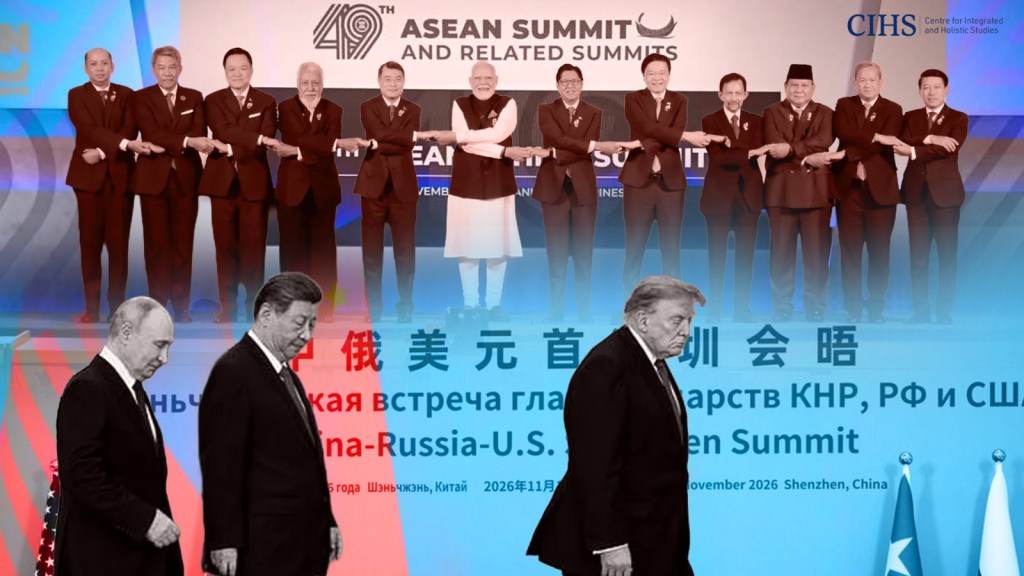
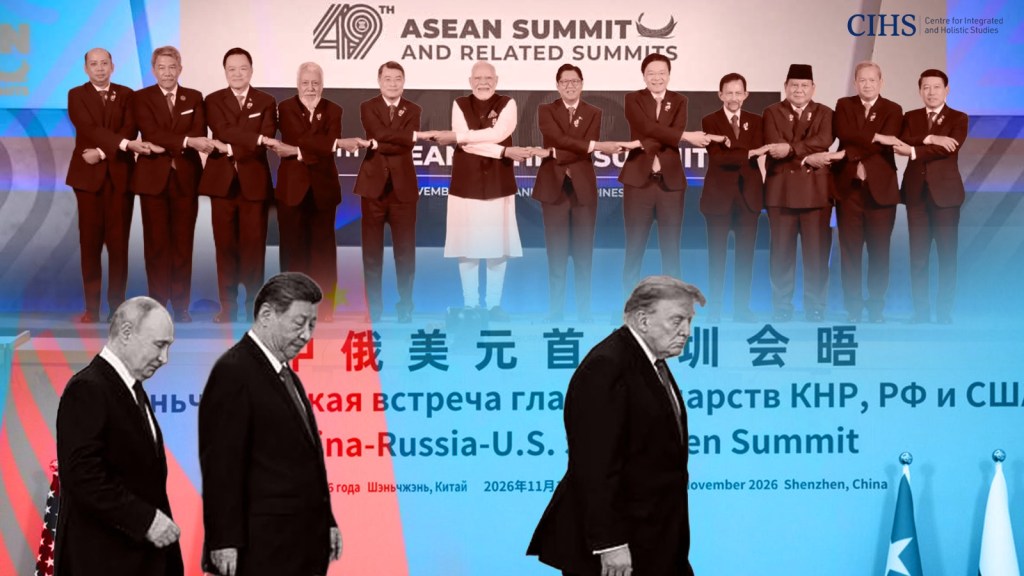
The 49th ASEAN Summit ran from November 15 to 17, and the Quad leaders met on November 17 for their first summit since 2024. Two days later, the first trilateral summit of Donald Trump, Xi Jinping and Vladimir Putin took place on the sidelines of APEC. Within 72 hours, the centre of global diplomacy had moved from Manila to Shenzhen. Together, these meetings show how the emerging world order is being negotiated.
Manila: Coalition-Building Without Confrontation
The Manila outcomes were practical and deliberately restrained. The Quad announced an Indo-Pacific Maritime Surveillance Collaboration, with a first joint maritime patrol aircraft exercise planned for 2027. One report noted that the statement did not name China, and that Trump announced minerals deals without details. The grouping is positioning itself as a capability-building club focused on maritime domain awareness and supply-chain resilience, not a containment bloc. ASEAN, for its part, ended with Marcos handing the chair to Singapore’s Lawrence Wong, keeping the region’s inclusive, consensus-based model intact.
Shenzhen: What the G-3 Actually Delivered
The result was the “China-Russia-US Declaration on Peace”. Its four points cover UN reform, energy, the ICC and nuclear risks, but it contains no provisions on Ukraine or ending the war. It also did not mention the war in Iran, though Trump said he raised both issues.
The trilateral’s substance includes nuclear risk, energy and international bodies. On the nuclear risk, the leaders agreed that nuclear war cannot be won and must never be fought. They will engage in dialogue on reducing nuclear risks and preventing proliferation. On the energy front, the three leaders said they intend to increase petroleum product production and supply and affirmed stable energy flows. Specifically, on the UN and the ICC, their joint declaration did not specify how the global body would be reformed.
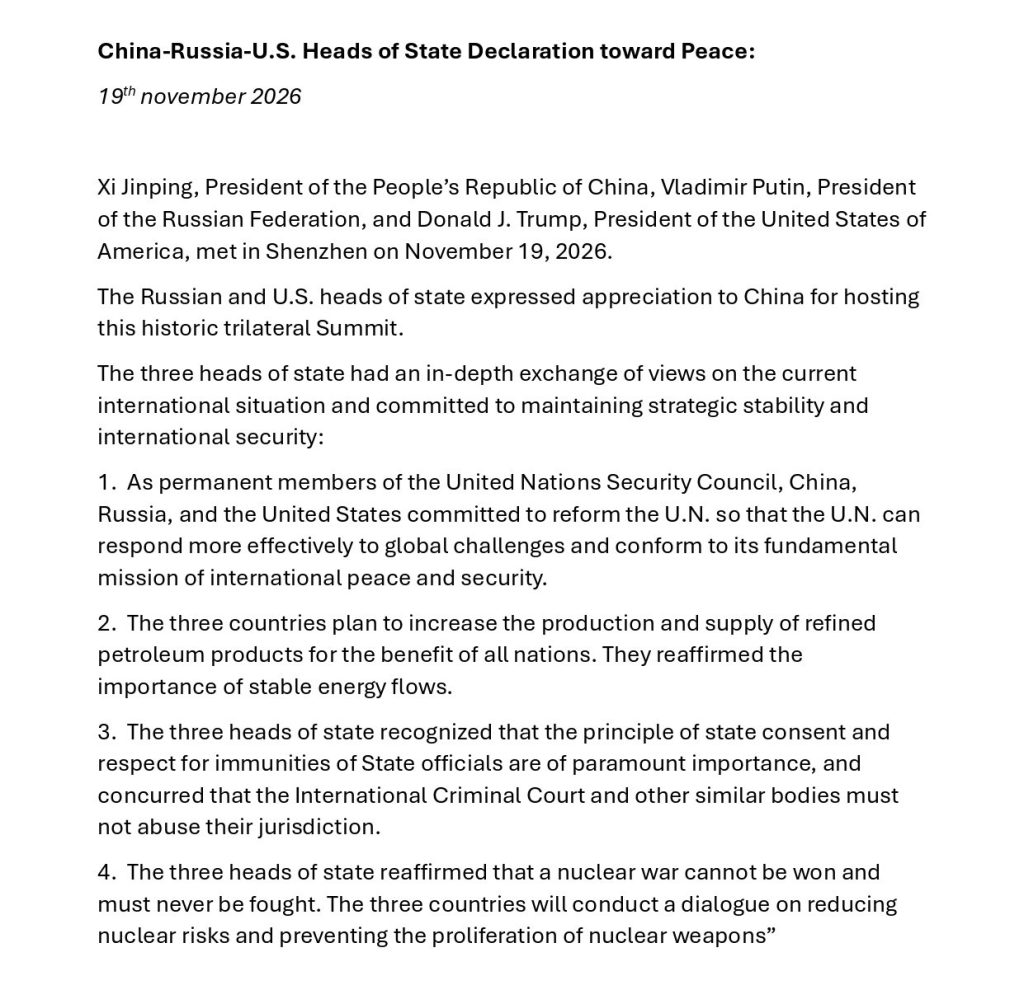
The nuclear language needs care. It reaffirms a principle first stated by Reagan and Gorbachev in 1985 and a pledge to “dialogue” is not arms control. Reports confirm no agreement to reduce nuclear arsenals. Cold War treaties of SALT and INF were bilateral and verifiable. A trilateral framework including a rapidly growing Chinese arsenal is a different and far harder undertaking.
Bilateral and APEC: The Economic Layer
Trump and Xi also held their third bilateral of the year. Trump praised the Board of Trade created in May, but the semiconductor curbs and rare-earth exports remain unresolved, with the trade truce expiring in January. That truce runs to January 10, and as of that report, neither government had announced outcomes on chips, rare earths, tariffs or soybeans.
The wider APEC picture is similarly modest. The leaders’ statement was titled the “Shenzhen Outlook” rather than the usual declaration and Xi reportedly urged the US on Taiwan. Xi opened the summit with calls for free trade and AI cooperation, while Trump rejected AI regulation. The divide matters: Beijing is casting itself as the steward of open trade and AI governance, a role Washington once claimed.
Three Messages to the International Community
Great-power directorates are back: The G-3 revives the logic of the Concert of Europe, in which major powers manage order among themselves. Kissinger’s 1972 triangle exploited Sino-Soviet rivalry. Today’s triangle seats Washington alongside two partners who publicly committed to advancing a multipolar world. Whether this is American flexibility or strategic drift is contested.
Agenda-setting is separating from problem-solving: The G-3 produced principles on nuclear risk, energy and UN reform, yet omitted the two wars most urgently on the table. As analyst Dhruva Jaishankar put it, Ukrainians are not in the room. Declarations without enforcement weaken trust among smaller states and Europe.
Hedging is now the default: ASEAN members and Bharat engaged in Manila and Shenzhen alike, committing to no bloc. The Quad’s omission of China and the G-3’s omission of Ukraine reflect the same instinct: avoid the hardest disputes to preserve space for deals.
What It Means for Bharat
New Delhi sits in a unique position. It gained from the Quad’s maritime and technology agenda, which aligns with Bharat’s defence planning in the Indian Ocean. It also has a history in trilateral formats, such as the 2018 Russia-Bharat-China meeting in Buenos Aires.
The risk is exclusion. A UN reform agenda negotiated among three veto-holders would marginalise Bharat’s long-standing claim to a permanent Security Council seat. Bharat’s best response is to be indispensable across formats: deepen defence-industrial and maritime cooperation through the Quad, keep energy and strategic channels with Moscow and keep pressing for a seat at any table where global rules are written.
Balance of Power: Transactional and Fluid
The outcomes point to a transactional order rather than a stable bloc system. China scored a convening victory by hosting the leaders of two nuclear superpowers. Russia gained recognition as a co-equal and kept Ukraine out of the text. US secured nuclear-dialogue language and a trade-truce runway, but at the cost of unsettled allies. Middle powers have more partners and less predictability.
Conclusion
Manila and Shenzhen are two halves of one story. The Quad and ASEAN offer coalition-building and inclusive regionalism. The G-3 offers older-style great-power bargaining. None of them has yet produced binding commitments on nuclear arsenals, Ukraine or trade.
Three things to watch next: whether the trilateral nuclear “dialogue” becomes a formal process and whether China joins it in practice; the January 10 trade-truce deadline; and how the UN-reform language is operationalised and whether middle powers like Bharat are written into it or out of it.
(Author is Chairman, Law and Society Alliance, a New Delhi-based think tank, and guest columnist with CIHS)


Leave a Reply