
Rahul PAWA | X- @imrahulpawa
The world’s most guarded technology is no longer stolen from laboratories. It is courted, patiently, across a dinner table.
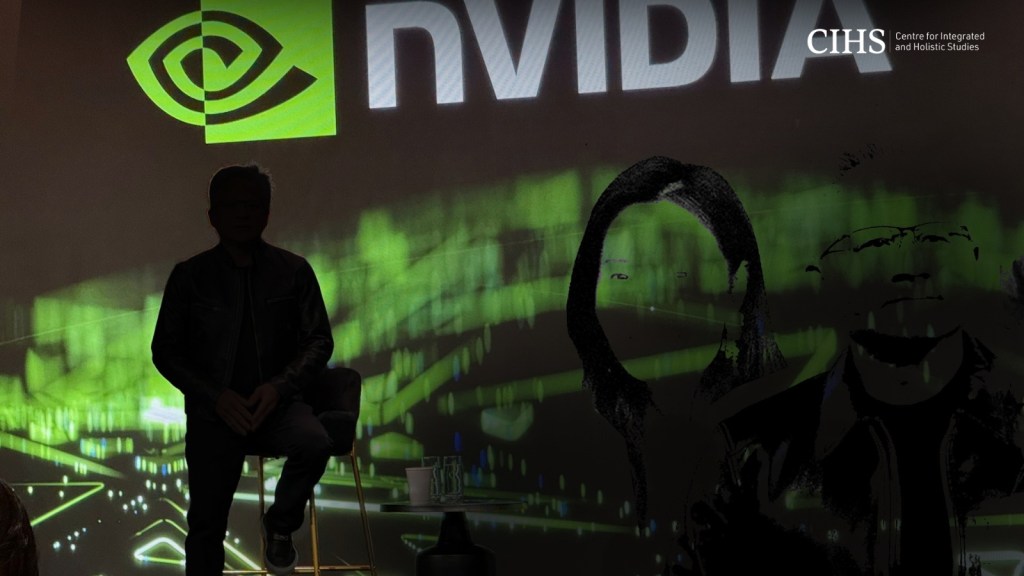
On Thursday 12 November 2026, a 33-year reign ended with a board announcement. Jensen Huang resigned as president, chief executive and director of Nvidia, effective immediately. Colette Kress, the company’s chief financial officer, was appointed interim chief executive, while Harvey C Jones became the first chair in Nvidia’s history. Four days earlier, Huang had told employees that he had been unfaithful to his wife. Media reports identified the woman as Alice Huang, a former executive at Megaspeed, a Singapore-based data-centre company and Nvidia customer, whom US intelligence reportedly assessed to be an asset of China’s Ministry of State Security. Within days, the newspaper reported employee allegations of a relationship with a senior Nvidia executive who reported to him, and people familiar with the matter, reported a third relationship, with another employee. By the end, Nvidia’s shares had tumbled, by some estimates erasing nearly $500 billion in market value; a proposed shareholder class action had been filed in California; and the board had opened an independent inquiry. Beijing has dismissed the espionage allegations as a smear, and Alice Huang has not been charged with any crime. The implications, however, extend well beyond one man’s private life. The front line of espionage increasingly runs through the global corporate suite.
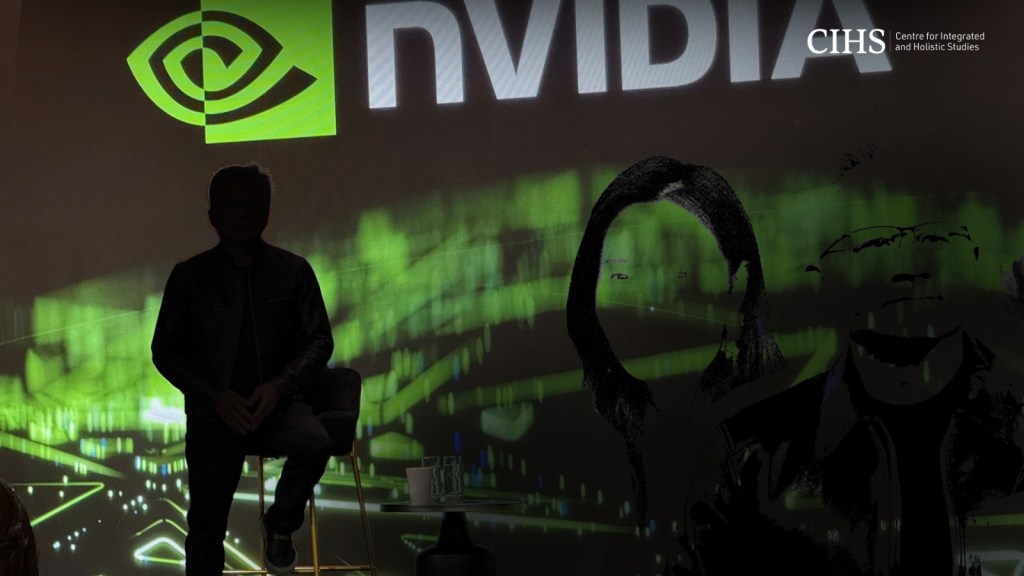
To understand why a private relationship became a national security concern, consider what Nvidia sells. Its processors power the training and deployment of some of the world’s most advanced artificial intelligence systems, making them among the most strategically valuable technologies of the decade. American export controls, introduced in October 2022 and subsequently expanded, restrict China’s access to advanced semiconductor technology. The underlying concern extends beyond commercial competition to military modernisation, weapons development, intelligence capabilities and mass surveillance. Where export controls exist, illicit procurement networks follow. Investigations have traced substantial quantities of restricted Nvidia processors into China, with American prosecutors alleging that intermediaries used front companies and misleading orders to circumvent export restrictions. Megaspeed, which according to reports bought more than $4.8 billion of Nvidia chips over two years, is itself under investigation in the United States and Singapore. Nvidia’s position in this ecosystem makes its leadership particularly consequential. Decisions about commercial relationships, customer access and technology transfers are no longer simply matters of corporate discretion. They carry national security implications. The judgement of a chief executive, including the relationships that shape access to that judgement, has become part of the wider export-control equation.
China’s statecraft has long recognised the strategic value of indirect influence. Sun Tzu devoted an entire chapter of The Art of War to intelligence and espionage, while the beauty trap appears among the Thirty-Six Stratagems, a centuries-old collection of Chinese military and political strategies. The use of personal relationships to cultivate access is hardly new. The Communist Party institutionalised intelligence operations through the Central Special Branch, established in Shanghai in 1927, with the Ministry of State Security emerging in 1983. Its intelligence tradition has frequently relied on patience, cultivation and access rather than immediate extraction. Larry Wu-tai Chin, recruited by Chinese intelligence in 1944, worked within American intelligence institutions for decades before his exposure. Soviet intelligence, meanwhile, became associated with the use of women trained to cultivate relationships for intelligence gathering and blackmail. China’s approach has often been characterised by a broader emphasis on professional, commercial and personal networks. An MI5 document circulated to British businesses, prepared in 2008 and leaked to the media in 2010, warned that Chinese intelligence services used sexual relationships, among other forms of leverage, to coerce cooperation. The distinction is not necessarily between seduction and conventional espionage, but between the methods through which access is secured and the information that access can ultimately yield.
The pattern extends well beyond Silicon Valley. In the United States, Congressman Eric Swalwell’s political and congressional circles were penetrated by Christine Fang, also known as Fang Fang, a Chinese intelligence operative who helped cultivate relationships with American political figures. Her involvement included fundraising assistance for Swalwell’s campaign and the placement of an intern in his congressional office. Swalwell was not charged with wrongdoing, and he ended contact after being alerted by the FBI.
In 2014, a federal judge in Hawaii sentenced Benjamin Bishop, a defence contractor and retired Army lieutenant colonel, to 87 months in prison for passing classified defence information to a Chinese woman with whom he had developed a relationship. They met at a defence conference; the FBI believed she may have attended it to target people with access to classified information.
In Britain, MI5 publicly identified the solicitor Christine Lee in 2022 as an alleged agent of influence working on behalf of the Chinese Communist Party’s United Front Work Department. Lee denied the allegations, but a tribunal ruled in 2024 that MI5 had acted lawfully in issuing its alert.
In Taiwan, prosecutors in July indicted a former TSMC deputy manager under the National Security Act, accusing him of copying confidential documents for use in China and drawing up a plan to recruit TSMC engineers to work there. South Korean prosecutors have indicted former Samsung personnel for allegedly passing memory-chip technology to China’s CXMT.
The techniques vary, from romance to the recruitment of insiders and the cultivation of political influence, but the logic is consistent: establish trust, cultivate access and exploit the vulnerabilities that accompany proximity to power.
Three lessons follow for anyone running a strategically significant company.
First, the chief executive may be the most consequential vulnerability in the organisation. Technical firewalls, access controls and cybersecurity protocols cannot independently audit personal relationships. Relationships involving executives of strategic counterparties, particularly those operating in sensitive technology sectors, must be disclosed and assessed as potential conflicts of interest.
Second, candour is cheaper than concealment. On 29 October, Jensen Huang described Nvidia’s dealings with Megaspeed as “normal and not unusual”. Ten days later he admitted the affair, and Nvidia insisted he remained committed to leading the company “without interruption”. Four days after that, he was gone, and Nvidia now faces a lawsuit alleging that it misled investors. A company’s responsibility to shareholders and regulators cannot be separated from its obligation to assess material national security risks.
Third, counterintelligence cannot remain the exclusive preserve of intelligence agencies. Corporate boards should receive regular briefings on foreign intelligence methodologies, insider threats, strategic technology acquisition and the cultivation of executive relationships.
India should read this as a warning. Its agencies have long dealt with espionage and honey-trap operations, often involving individuals with access to sensitive military, administrative and scientific information. As India expands its semiconductor ambitions, defence-industrial capabilities and artificial intelligence ecosystem, the value of what it produces will inevitably attract greater intelligence interest.
However, the law needs to pick up pace. India still has no dedicated trade-secrets statute. In March 2024, the Law Commission’s 289th Report drafted a Protection of Trade Secrets Bill, while setting aside economic espionage by foreign states, the very threat at issue here, for separate treatment. More than two years on, the bill has yet to become law. Parliament should enact it and take up the espionage question, while companies adopt robust disclosure and counterintelligence protocols. None of this warrants suspicion based on nationality, gender or personal association. It demands institutional vigilance, transparency and accountability. The next approach may not look like espionage at all. It may look like the most interesting conversation of the evening.
The author is an international criminal lawyer and director of research at New Delhi based think tank Centre for Integrated and Holistic Studies (CIHS).





Leave a Reply