

Siddharth Sehgal
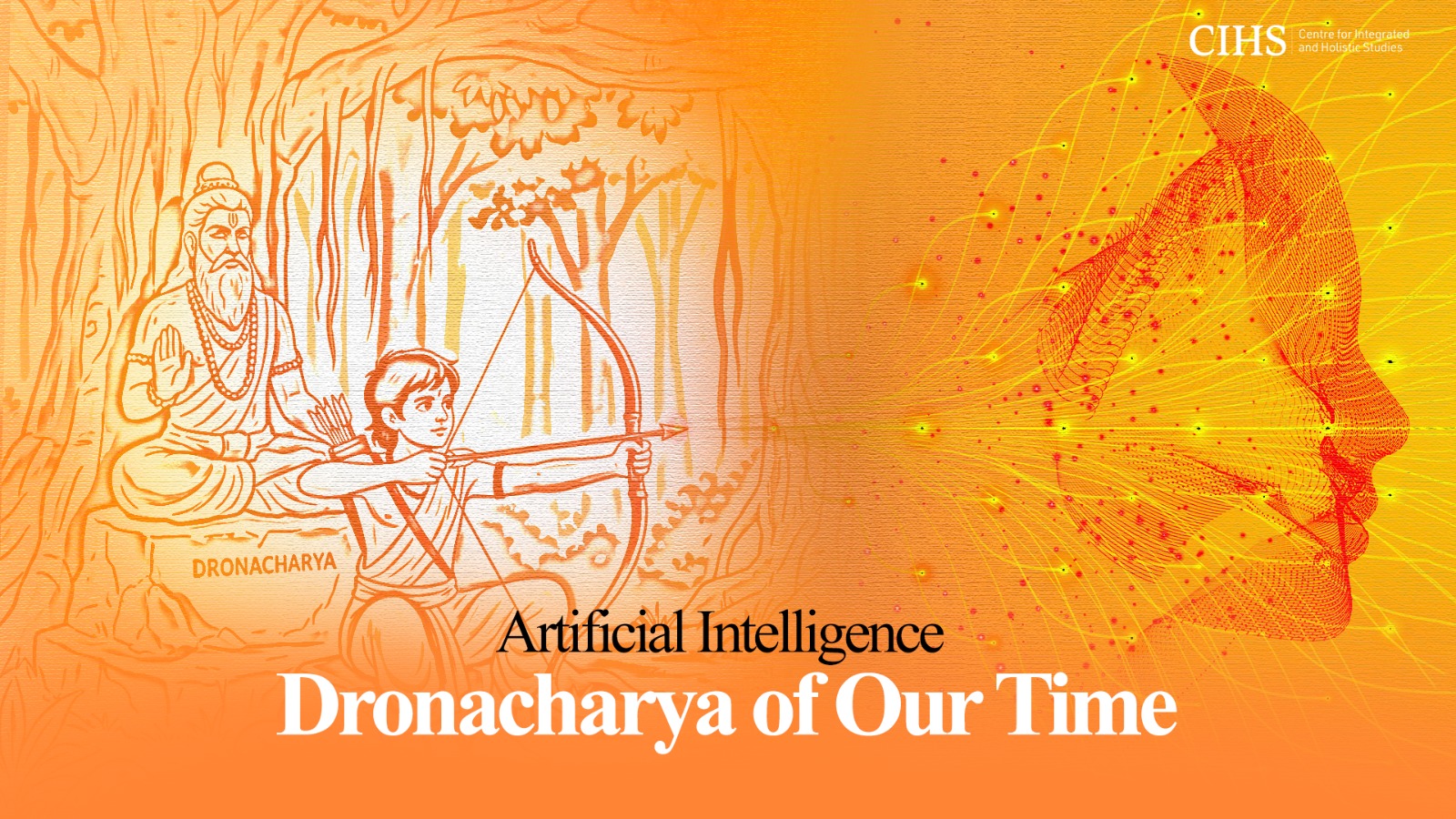
In Mahabharata, Eklavya, if explained in modern terms, was an archery aspirant from a disenfranchised section of society at the time; he wanted to study under Dronacharya, who only taught the princes from the royal household. So he took it upon himself to master the art under the symbolic tutelage of Dronacharya’s statue that he carved.
His story highlights three key points that are relevant to current context. First, an underprivileged background cannot hold someone back if they have the dedication and will to put in the effort.
Second, someone’s background can impede his or her progress despite the talent, an unfortunate fact that is true to this day. Third, Dronacharya was the “technological advantage” of his era that enabled students like Arjuna, Bheema and Duryodhana to excel in warfare.
AI is the technical advantage today and it increases asymmetry in favour of students who have access to this technology and can leverage it in the exam-heavy Indian education system.
Consider a scenario: a son or daughter of a tech executive who is preparing for NEET will be able to augment his exam preparation using Large Language Models (LLMs) like Claude, ChatGPT or Gemini; whereas son of a poor farmer in Madhya Pradesh may have limited access to devices like laptops or mobile phones and may not be aware of maximizing output from an AI app.
This is where the gap between students from haves and have-nots becomes significant when we consider the fact that we have millions of families in Bharat that live below the poverty line. In fact, speaking from personal experience of preparing for a certification exam, I realized that my preparation time was reduced by half when I started interacting with LLMs to work on my weak areas.
The model not only corrected mistakes but provided specific inputs on how I can try other ways to improve my performance. In a sense, it became my Dronacharya, so imagine the difference this technology would make in the hands of those who know how to use it.
Another element in this unlevel playing field is the Education ecosystem itself. Schools in many tier-2 and tier-3 cities, towns, and villages have challenges related to the availability of technical labs; moreover, AI education is far from embedded into the education system, and teachers and educators are not adequately trained or equipped to guide students on these emerging technologies.
Majority of these models are trained in English though that is changing lately by the emergence of native Indian models and inclusion of Indian languages in mainstream models’ training data, but still, the volume of knowledge base available in English language in the training data is vast when compared to other languages.
So, writing prompts in English is the default choice if someone wants to extract insights on any given issues. Plus, prompts and engagements from users all over the world enrich the training data available in English.
In essence, students who have completed senior secondary education in Hindi, Marathi, Tamil, Telugu and Assamese or any other language other than English may find a steeply inclined learning curve when it comes to catching up in the AI space.
International schools in tier-1 cities like Gurgaon and Mumbai, ed-tech companies and coaching institutions are already taking initiatives in these areas to give their students an edge in the hyper-competitive entrance exam domain. They have means to buy expensive subscription for their students that has more services like image and content generation.
The concern here is that technology is evolving at a pace that our education system can never catch up with and it presents a risk not only to our society but it has long-term consequences to our economy, safety and development.
One sometimes find it ironic that government officials like District collectors, Magistrates and Police Commissioners are essentially selected on virtue of clearing an exam or two that has little to do with individual abilities like leadership, teamwork or communication skills.
People worry about AI regarding more near-term problems such as job losses but it is changing the way we learn, rationalize and think. Countries that embrace this technological revolution will reap tremendous benefits for their citizens.
We need to rethink the exam system as a whole; it has to go through an underlying transformation towards learning based structure rather than an exam-ranking system.
(Author works in the AI field and holds an MBA from INSEAD)

