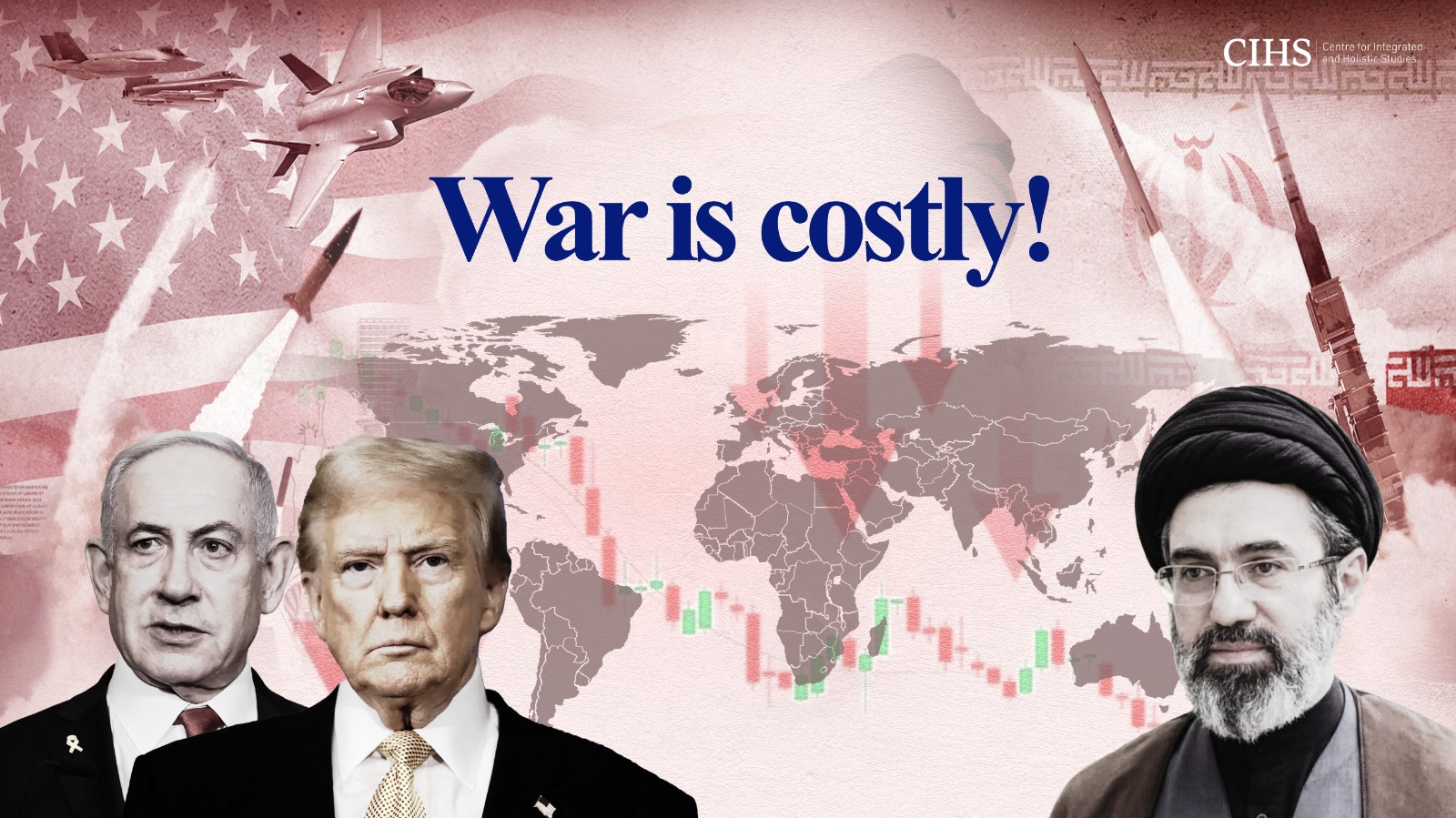


There’s no escape from huge costs of US, Israel war in Iran that has cascading effect on economy, human life, communities & the world
K.A.Badarinath
Actuals are never known. But, ballpark figures are rounded off to a whopping US $ one trillion as cost of US – Israeli war with Iran beginning February 28.
This estimate could include both short term costs, long term liabilities and replacement, replenishment and rejig costs of war machinery for United States. Rebuilding the military and naval bases of US security establishment across West Asia damaged by Iran is again a tough nut to crack and estimating the damages, both actuals and consequential, are tricky.
Prof Linda Bilmes, a public policy expert at Harvard Kennedy School has been quoted for estimating the cost of war with Iran for US citizens to be US one trillion dollars. This will further push up the country’s deficits.
Republican White House headed by President Donald J Trump and his budget office have not provided any guidance on cost of war with Iran.
Only two definitive figures available in public domain are that US incurred US $ 11.5 billion in first six days and Pentagon sought another US $ 200 billion towards bankrolling the war machinery especially high cost carriers, ballistic missiles, tom hawks, fighter jets and choppers. An aggregate US $ two billion per day is reportedly the cost Trump administration incurred to keep the war going as per one estimate.
Even US $ one trillion estimate made by Prof Linda Bilmes is viewed as very conservative given that US incurred over US $ 5 trillion in conflict with Iraq and Afghanistan.
Though defence analysts have different estimates of the war, none may have been comprehensive or wholesome. Also complicated models for estimating the war expenses like replacement costs of munitions could may be big vis-à-vis the actual production costs.
Costs incurred by US partner Israel and its adversary Iran may not have been covered in this estimate of Prof Bilmes. And, there are no monetary costs put to their war efforts by either Israel or Iran.
Economic impact of the war has also not been considered in this US professor’s projections. Chatham House has estimated that the war may adversely impact West Asian region’s economy by 2 – 3 per cent. It’s not for the entire world and these estimates could undergo a sea change given longevity of the war machine chugging along.
Energy markets disrupted by the war are big in terms of cost component where truce seems elusive and tentative. About two months of disruption in crude, LNG, hydrogen fuels, aviation turbine fuel, LPG and piped domestic gas is differential and varied in terms of costs given massive fluctuation in prices of these hydrocarbon based energy products.
The war may roil the global economy during next three to four quarters. Decisive factor would be 24-mile Strait of Hormuz which accounts for movement of one fifth oil and its associated commodities.
Costs to secure and safe passage of ships on the Strait, tolls being imposed by Iran and US in competition would determine how the energy markets behave here after.
American economy may not feel the direct heat immediately given its relative insulation from conflict which may not end anytime soon. But, West Asia, Europe – both Eastern and Western components – South, South Asia would bear the maximum brunt as direct consequence of war. Both direct and indirect costs of war are different for each of the countries.
Developing and least developed countries would face the heat with their development budgets going haywire and kitchen budgets of families going through the roof. Multi-lateral agencies like International Monetary Fund (IMF) and World Bank are at loss to project the losses to world economy.
Not everything is gloomy on economic front owing to the US – Israel war with Iran. Oil companies, aircraft producers, munitions manufacturers, infrastructure firms in a way are also biggest gainers as huge post-war reconstruction contracts would come their way.
Reconstruction of war ravaged Iran may be a herculean task. Development agencies, reconstruction players and core sector companies would see big business opportunities.
About US $ 500 billion worth infrastructure damages incurred by Iran may open up fresh business prospects for global companies. Iran reportedly made compensating war damages by US as a condition to prolonging war truce. One estimate put the damages suffered by Iran to its ports, airports, bridges, shipping lanes, water ways, water desalination plants, railways and roadways etc. at US $ 270 billion. One way of recovering this by Iran was taxing ships passing through Strait of Hormuz which is completely against set international norms.
Consulting firm Rystad Energy has put the damages to energy infrastructure in West Asia at US $ 58 billion. The damages to 80 energy facilities in gulf region do not include what’s collapsed in Iran.
Above all, environmental costs of war are too huge for the world fighting climate change and carbon emissions. Five million tonnes of carbon emissions during first 14 days of war were reported by Climate and Community Institute based in UK. Carbon dioxide costs of war surpassed that of 84 countries emissions in those two weeks. Long term damages are too huge and humungous to estimate immediately.
Biggest cost of war is the human life and communities living that’s too huge.
(Author is veteran journalist, Director & Chief Executive of non-partisan think tank, Centre for Integrated and Holistic Studies based in New Delhi)

