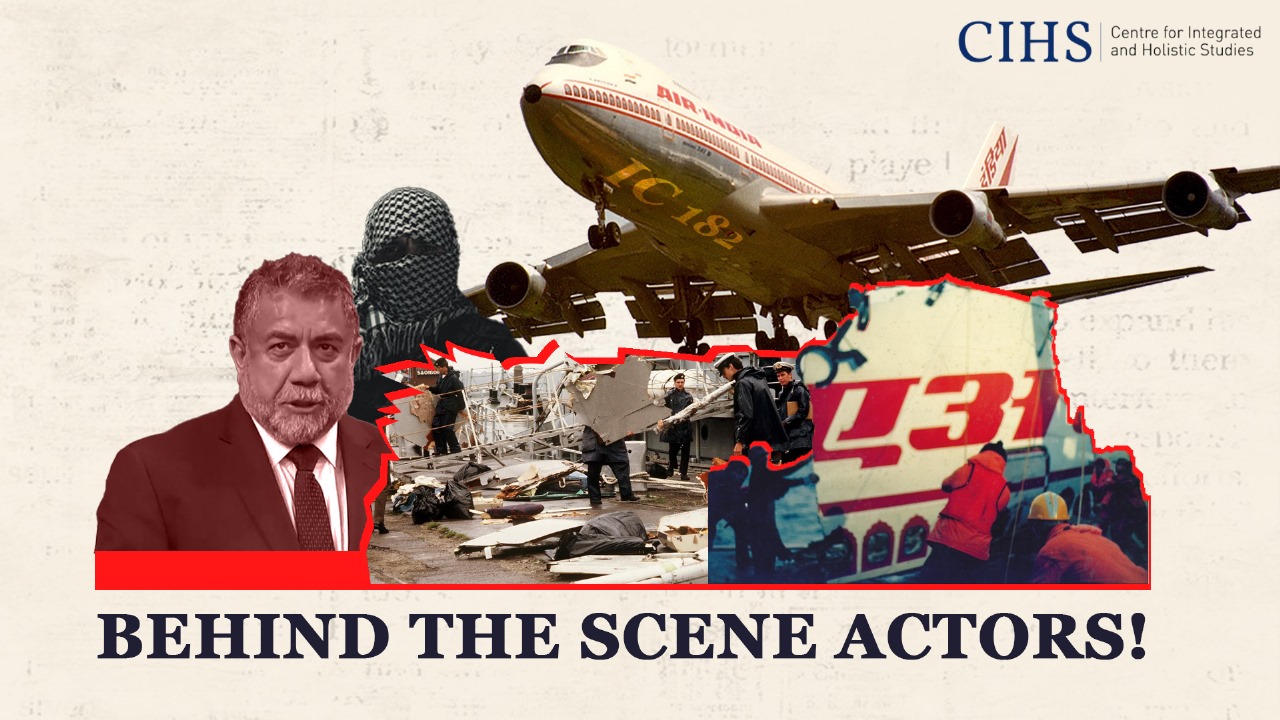


Who’s behind Canadian MP’s petition for fresh probe into IC 182 bombing; State, non-state actors, terror handlers or someone else?
Rohan Giri
In August 2023, Liberal Party of Canada lawmaker Sukh Dhaliwal sponsored a petition in the country’s Parliament that has reignited debate on contentious and painful chapter in Canadian history, the 1985 bombing of Air India Flight 182.
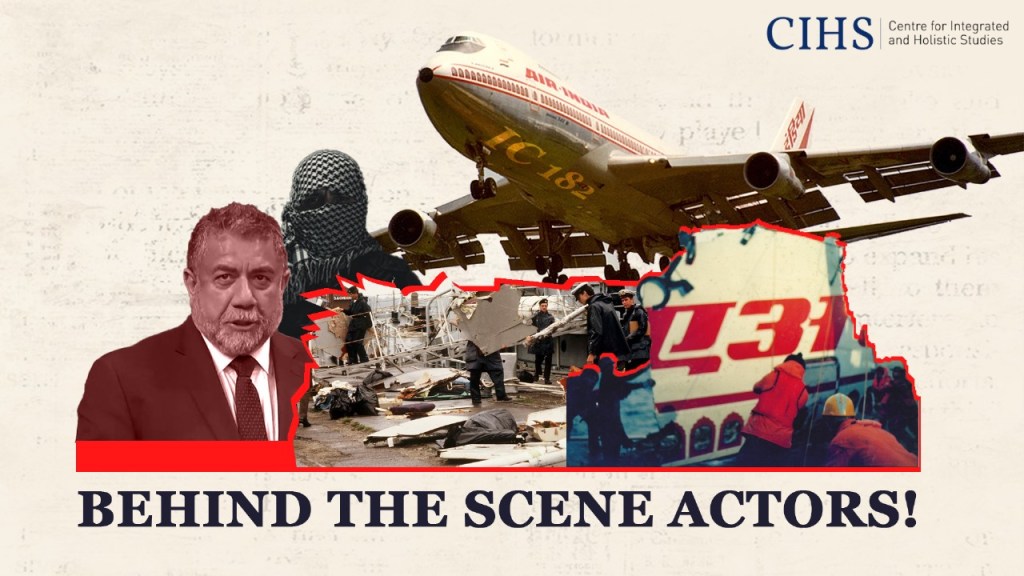
Petition spearheaded by Surrey journalist Gurpreet Singh and backed by Dhaliwal pushed for a third probe into the bombing and suggested that Indian government agents may have been behind the attack.
This theory has been thoroughly debunked by Canadian government in its past two investigations. Former Supreme Court judge in Canada, John C. Major wrote in ‘Air India Flight 182: A Canadian Tragedy’ that “the bombing was carried out by Sikh extremists as retaliation against Indian government for Operation Blue Star, effectively debunking any notion that Indian government itself was involved.”
The move to revive this discredited narrative has sparked widespread concern reopening wounds for victims’ families and stirring tensions within Canadian and Indian community. This rejoinder delves into implications of this petition, examining potential consequences for historical integrity, public perception, social cohesion in Canada and broader threat posed by Khalistani terrorism in the west.
Background and Context
In Canadian history, 1985 Air India bombing on June 23 was a terrifying tragedy. All 329 passengers and crew members were killed when Air India Flight 182 which was on its way from Montreal to London exploded over Atlantic Ocean. Majority victims were Canadian citizens of Indian descent. A second bomb, meant for another Air India flight exploded unexpectedly at Narita Airport in Japan, killing two baggage attendants. The incident was instantly recognized as a terrorist act, and further investigations by Canadian authorities revealed that Khalistani terrorists resident in Canada were responsible.
There were two significant investigations on the bombing. The first, headed by Justice John Major that came to a conclusion in 2010 and proved that mastermind behind attacks was a Canadian citizen and Khalistani terrorist Talwinder Singh Parmar.
The investigation exposed serious shortcomings on the part of Canadian security services, viz., Canadian Security Intelligence Service (CSIS) and Royal Canadian Mounted Police (RCMP) who were warned by Indian government of the threat posed by terrorists from Khalistani groups in Canada but did not take appropriate action.
Second investigation done in 2005 under command of former Ontario premier Bob Rae highlighted how Canadian authorities permitted the attack to take place. Rae’s assessment confirmed Parmar’s involvement as mastermind and called the attack a “cascading series of errors” by Canadian authorities. The idea that Indian government operatives were engaged in the attack was explicitly rejected by both investigations which found no reliable evidence to back up such allegations.
After these extensive investigations, some extremists, especially those who support Khalistan movement for a separate sovereign Sikh state carved out of India continue to indulge in conspiracy rhetoric that the Indian government was responsible for the bombing.
When Indian spies were allegedly implicated in assassination of Khalistani terrorist Hardeep Singh Nijjar in Surrey, British Columbia, in September 2023, Canadian Prime Minister Justin Trudeau brought attention to this theory yet again. The petition led by lawmaker Dhaliwal was prompted by this assertion which served as an excuse for revival of the debunked conspiracy surrounding bombing of Air India aircraft.
Analysis of the Petition’s Implications
Political leaders’ obligations to uphold social peace and historical accuracy are seriously called into question by their sponsorship of this petition which was initiated by Sukh Dhaliwal, a Member of Parliament.
Though Dhaliwal claimed that supporting the petition does not necessarily mean that he agrees with it, it may be smart word play. It does not clarify the position of Dhaliwal who managed over 400 supporters’ signatures to this petition. The very move may have far-reaching effect on Canadian society as a whole as well as families of the victims.
Perhaps this petition could alter facts relating to Canadian history which is one of the biggest concerns of victims. Rigorous research and ample proof support findings of Major and Rae investigations. Canadian legal system’s reputation and public’s confidence in established facts could be compromised if these conclusions are contested without purported fresh evidence. Younger generations who might not have been familiar with specifics of Air India bombing, spread of disproven ideas might result in a skewed perception of horrific events.
There are emerging conflicts within Canadian community as a result of the petition. The projected Khalistan state continues to be a contentious issue. Majority Sikhs in Canada do not support Khalistani movement. But, a small chunk does. It is possible that the sponsorship of this petition by a well-known Sikh Member of Parliament would deepen existing differences, increase mistrust and animosity within the Indo-Canadian community. In a multicultural nation like Canada where social cohesiveness depends on respect and understanding between various cultures, this is highly troublesome.
For the victims’ families, the appeal also runs with the potential of reviving old wounds. These families have been dealing with the suffering of losing loved ones in acts of terror for almost forty years. A certain amount of closure was brought about by the Major and Rae inquiries’ conclusions, which confirmed that justice had been done and the truth had been discovered. This hard-won peace might be endangered by an upsurge of debunked hypotheses, which would force the relatives of the victims to revisit their grief and face the prospect that their loss would be used for political advantage.
The families of victims had strong adverse reactions toward the petition. As per reports, Deepak Khandelwal who lost both of his sisters in the bombing has expressed his opposition to the petition labeling it as “hurtful” and charging its creators with trying to “rewrite history” and “promote hatred.” Like Bal Gupta whose wife Rama was also slained in the attack, others have denounced the petition as “garbage” and an attempt to garner attention and support for terrorist actions. These voices demonstrate the intense anguish and annoyance that the petition has produced among those who have been impacted by the bombing.
Impact on Public Perception
Promoting disproved conspiracy theories can negatively impact public opinion, especially in a culture where false information and misinformation are spreading more and more. It is important to comprehend the tragic and intricate historical background of Air India bombing. But by emphasizing debunked theories, the petition runs the risk of overshadowing the facts and confusing and misleading the public.
This is alarming when majority of Canada’s new generation either don’t know anything about Air India bombing or don’t recognize it at all. In this situation, bringing on board false narratives could fill the vacuum left by lack of public knowledge resulting in an altered and wrong perception of Canada’s most heinous tragedies. In order to maintain integrity of the facts and influence public opinion, government’s response to this petition will be very important.
In addition to being a tragedy for victims and their families, Air India bombing served as a warning about threats of extremism, terrorism and importance of being vigilant in preserving national security. A current Member of Parliament who is sponsoring this petition carries the risk of giving an impression that the Canadian government is not entirely dedicated to addressing these threats which would erode public confidence in institutions and leaders.
Moreover, the petition potentially impacts Canada – India relations to a great extent. Recent years have seen tensions in the two nations’ bilateral ties especially on Khalistani extremism. The reappearance of debunked hypotheses regarding Air India bombing can further strain relations, possibly resulting in diplomatic hostilities and impeding collaboration on vital matters like immigration, trade and security.
The petition could pose a threat to historical accuracy, causing families of the victims to go through past trauma and escalating social tensions in Canada. In response to this petition, Canadian government has to be strong in its rejection of propagating debunked conspiracy theories and reiterate its adherence to conclusions of Major and Rae investigations.
The government had to think about initiating a public awareness campaign regarding Air India bombing in order to maintain historical accuracy and stop proliferation of disinformation. The awareness campaign may encompass school-based instructional programmes, public memorials for victims and activities to make sure Canadians are aware of and comprehend the bombing’s horrific story.
It is imperative that the government hold discussions with the community highlighting the significance of harmony and reciprocal regard within a heterogeneous community. Government may contribute to the healing of divisions caused by this petition and fortify Canada’s social fabric by attending to concerns of all parties involved.
By doing this, Canada can show its continued dedication to social cohesion, justice and truth while also paying tribute to victims of Air India bombing and providing support to their families.
Canadian government should consider probing into possibility of ‘external state and non-state actors seeking to bring about divisions within its society by propping up non-issues. Is there an attempt to derail centuries old Indo – Canadian relations? Also reassessing Canadian government’s responses towards extremism, terrorism and violent groups especially in Khalistani mould may have to be done. Further, all stakeholders may have to come together to reject attempts to use the horrific bombing as a ‘political tool’.
(Author is content manager at Centre for Integrated and Holistic Studies)

