Bangladesh’s Political Alliances Ahead of the 2026 Elections: Domestic Shifts and Geopolitical Alignments

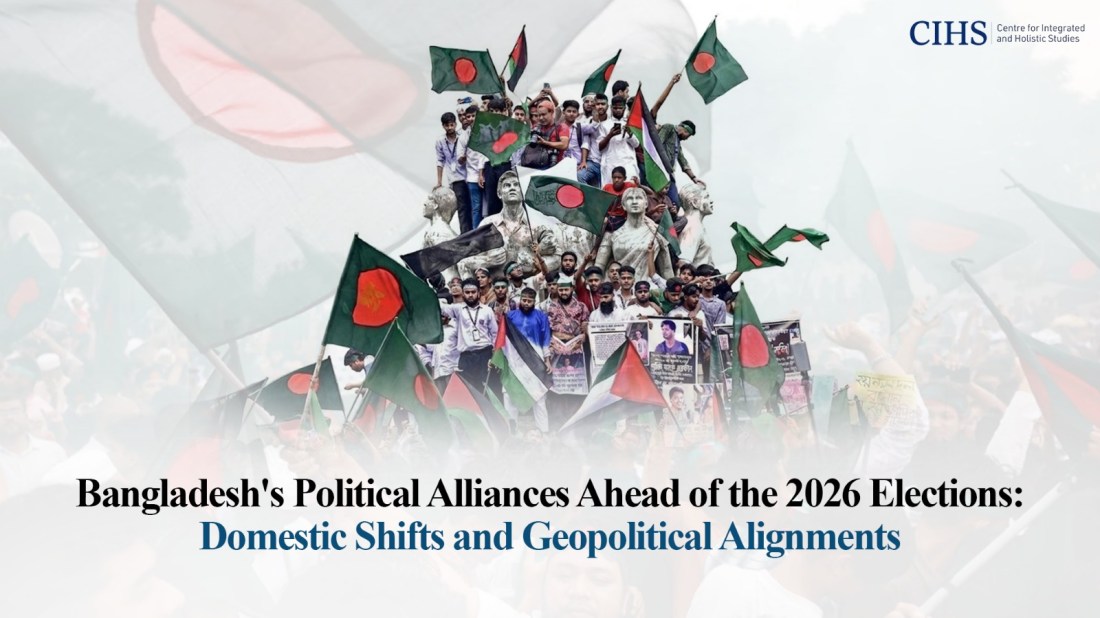
Bangladesh’s Political Alliances Ahead of the 2026 Elections: Domestic Shifts and Geopolitical Alignments

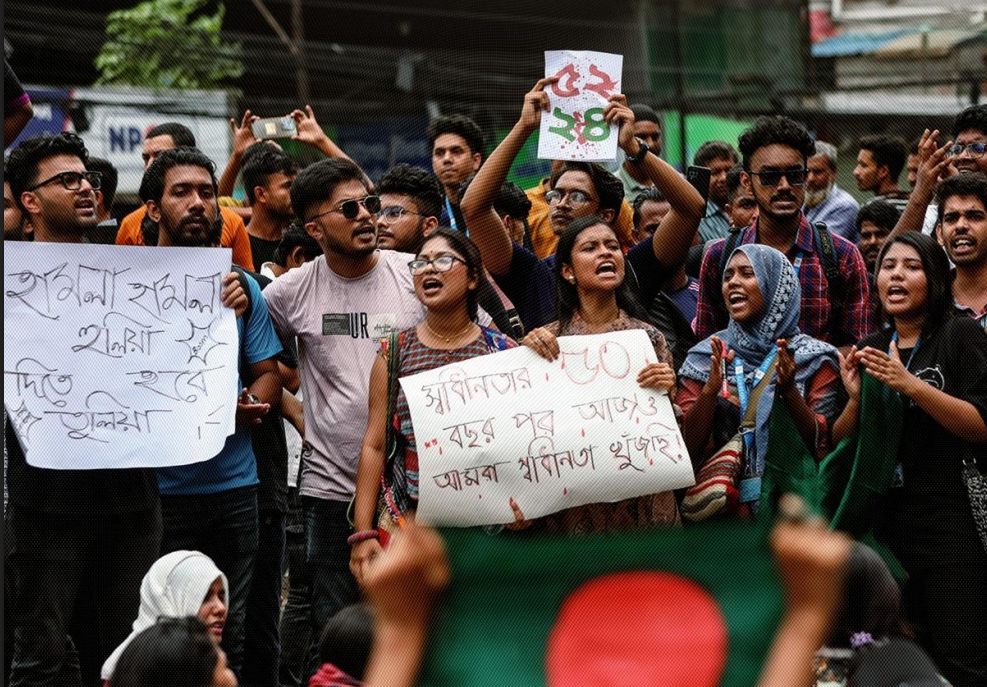
By N. C. Bipindra As Bangladesh moves toward the general elections scheduled for February 2026, the country is experiencing its most far-reaching political realignment in decades. The collapse of Sheikh Hasina’s long-entrenched Awami League dominance following the 2024 mass uprising has dismantled the familiar two-party framework and given rise to a fragmented, competitive political arena. … Continue reading Bangladesh’s Political Alliances Ahead of the 2026 Elections: Domestic Shifts and Geopolitical Alignments

Democracy, Disorder and the Question of Legitimacy in Bangladesh  

Democracy, Disorder and the Question of Legitimacy in Bangladesh: An Interview with Sheikh Hasina

Sheikh Hasina's Interview With Arun Anand In an exclusive and wide-ranging conversation with author and columnist Arun Anand, former Bangladesh Prime Minister Sheikh Hasina breaks her silence on the dramatic events that led to her departure from Dhaka, the violent derailment of the 2024 student protests, and what she describes as the systematic dismantling of democratic … Continue reading Democracy, Disorder and the Question of Legitimacy in Bangladesh  

Bangladesh: A Nobel Halo, an Islamist State,Terror Networks and Radicalisation as State Policy

Bangladesh: A Nobel Halo, an Islamist State, Terror Networks and Radicalisation as State Policy

Rahul PAWA | @imrahulpawa (X) Global jihadists see an opening: a chance to reconnect their Pakistani networks with Bangladeshi extremists, reversing years of counterterrorism and counter-radicalisation gains.On a mid-December night in Bangladesh, 25-year-old Dipu Chandra Das, a Hindu garment factory worker was beaten by a frenzy of Islamists, hung from a tree, and set ablaze … Continue reading Bangladesh: A Nobel Halo, an Islamist State,Terror Networks and Radicalisation as State Policy

A Nation at Risk While the World Watches

A Nation at Risk While the World Watches

By R K Raina The events that unfolded in Dhaka this week should end any remaining illusion that Bangladesh’s current political drift is a contained or internal matter. On Wednesday afternoon, hundreds of protesters marched towards the Indian High Commission under the banner of July Oikya, raising anti-India slogans and issuing open threats against a … Continue reading A Nation at Risk While the World Watches

1971 Genocide and the Unhealed Scars of Bangladesh

1971 Genocide and the Unhealed Scars of Bangladesh

Bangladesh may paper over its wounds one by one, but the scars of systematic genocide during 1971 Bangladesh Liberation War will remain permanent.  Pummy M. Pandita The 1971 Bangladesh Liberation War was marked by a systematic campaign of genocide carried out by the Pakistan Army and its supporting forces, Razakars, against the Bengali population, pro-independence … Continue reading 1971 Genocide and the Unhealed Scars of Bangladesh

Bangladesh’s self-goal: tilt to Pakistan

Bangladesh’s self-goal: tilt to Pakistan

Jamat e Islami and Muhammed Yunus seek to shape Bangladesh into politically radical Islamic nation and threaten its Bengali Identity N. C. Bipindra During a 1955 debate in Pakistan’s Second Constituent Assembly on whether the eastern province should be called East Bengal or East Pakistan, Sheikh Mujibur Rahman said, “We have demanded so many times … Continue reading Bangladesh’s self-goal: tilt to Pakistan

2001 INDIAN PARLIAMENT ATTACK

2001 INDIAN PARLIAMENT ATTACK

13 December 2001 is remembered as a turning point in Bharat’s democratic history, when democracy was not merely challenged but violently attacked by Jaish-e-Mohammed, targeting not just lives, but the very sovereignty, constitutional stability and civic trust on which the nation stands. Pummy M Pandita Attack on the Indian Parliament on 13 December 2001 was … Continue reading 2001 INDIAN PARLIAMENT ATTACK

Analysis: From Siege to Staccato Strikes: 26/11 Mumbai Attack to 10/11 Red Fort Blast

From foreign-directed, 26/11-style mega-operations to low-signature, micro-cell, digitally inspired strikes like 10/11 and the foiled ricin plot, India's terror landscape has changed. Through community monitoring, hardened cities, quick forensics and sharper intelligence India has reduced incidences significantly. In order to combat terror ecosystems at their root, world must now embrace India's zero-tolerance policy and modernise … Continue reading Analysis: From Siege to Staccato Strikes: 26/11 Mumbai Attack to 10/11 Red Fort Blast