

BNP’s huge victory puts a big responsibility on Tarique Rahman to reshape Bangladesh’s politics, re-balance power equations globally and rejig economic policy formulation.
N. C. Bipindra
The outcome of February 12, 2026, general elections marked a watershed moment in Bangladesh’s political history. It has dramatically altered balance of power and set the stage for a new era in governance.
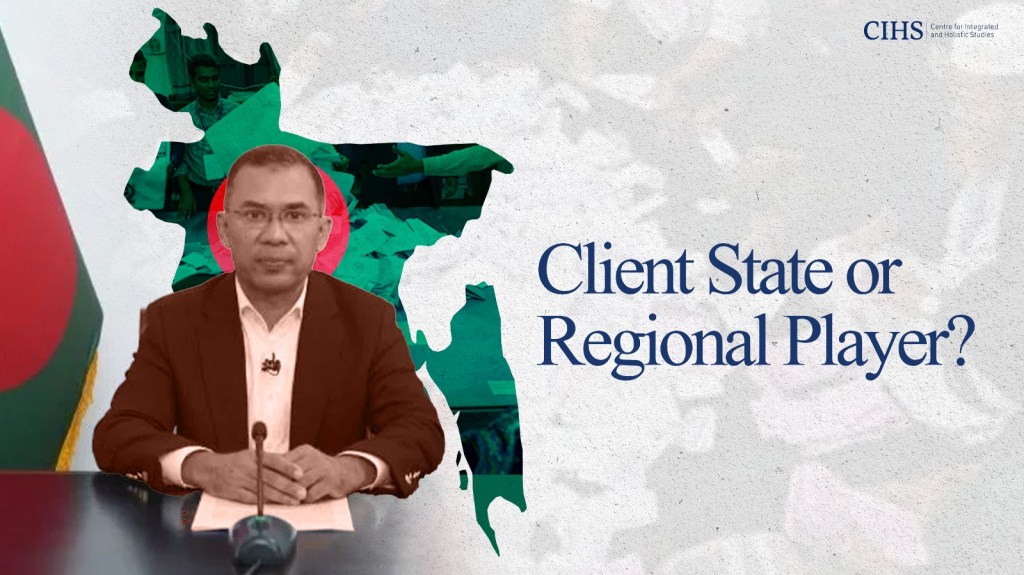
Bangladesh Nationalist Party’s (BNP) resounding victory signals not merely a change in government but reflect a deeper shift in Bangladesh’s domestic political order.
With a commanding parliamentary majority in 13th Jatiya Sangsad, BNP has tromped home to power after nearly two decades in opposition. The political space once dominated by Awami League has undergone an unprecedented shift.
The election is widely regarded as most competitive and consequential since political upheaval of 2024 which saw fall of long-serving Prime Minister Sheikh Hasina, following mass protests and civil unrest.
The absence of Awami League from electoral fray reshaped competitive landscape, effectively ending entrenched two-party rivalry that had defined Bangladeshi politics for decades.
In its place, a new alignment has emerged, with BNP consolidating power while Bangladesh Jamaat-e-Islami got mainstreamed, strengthened its parliamentary footprint as principal opposition formation.
At the centre of this political transformation stands Tarique Rahman, BNP leader, who is poised to assume the office of prime minister. His return to frontline politics after years in exile represents a dramatic personal and institutional comeback.
For BNP, the electoral mandate is both a vindication of its long campaign against what it described as authoritarian rule and heavy responsibility to deliver institutional reform, economic recovery and political reconciliation.
One of the most significant developments accompanying the election was approval of constitutional reforms through a parallel referendum.
The amendments introduce term limits for prime minister, strengthen judicial independence and expand safeguards aimed at preventing executive overreach.
These reforms are designed to address concerns about excessive concentration of power that had accumulated over past decade and a half.
The referendum’s success indicates broad public appetite for systemic recalibration and democratic consolidation, reflecting a desire to prevent re-emergence of dominant-party rule.
Domestically, BNP’s victory reshapes political calculus in several critical ways. First, it dismantles old Awami League–BNP binary that had structured electoral competition since the 1990s. The sidelining of the Awami League leaves a significant vacuum in secular-nationalist political space.
Whether that space is eventually reoccupied by reconstituted Awami League, a new centrist force or remains fragmented will determine durability of the new political order.
For now, BNP’s dominance gives it legislative freedom to pursue policy reforms without the constraints of a fragmented parliament.
Second, the rise of Bangladesh Jamaat-e-Islami as a strong opposition block introduces new ideological dynamics into parliamentary politics.
Jamaat’s improved electoral performance underscores continued resonance of conservative and religiously oriented political narratives in certain regions.
While BNP and Jamaat have historically cooperated tactically, the evolving relationship between them will shape legislative debates on social policy, education, socio-religious equations and governance norms.
The presence of a robust Islamist opposition also complicates BNP’s balancing act between appealing to its traditional base and projecting a reformist, moderate image to urban and business constituencies.
The collapse or marginalisation of smaller parties, including the once-influential Jatiyo Party highlights another structural shift.
The electorate appears to have consolidated around clearer poles of power, reducing role of kingmakers and coalition brokers.
This concentration of power can enhance decision-making efficiency but also raises concerns about reduced pluralism if institutional checks are not effectively maintained.
The newly introduced constitutional safeguards will therefore face an early stress test under BNP stewardship.
Youth participation and civic mobilisation have emerged as defining undercurrents of this electoral cycle.
The protests of 2024 were largely driven by younger Bangladeshis demanding accountability, employment opportunities and an end to entrenched patronage networks.
Although youth-led political platforms did not translate that energy into sweeping parliamentary gains, their influence on public discourse has been unmistakable.
All major parties, including BNP were compelled to address issues such as job creation, digital governance, anti-corruption measures and institutional transparency.
The durability of youth engagement will determine whether Bangladesh’s political evolution moves toward participatory reform or reverts to personality-driven politics.
Economically, the new government inherits a fragile macroeconomic environment marked by inflationary pressures, currency volatility and strains in the export sector.
The garment industry considered backbone of Bangladesh’s economy, experienced disruptions amid political instability. BNP has pledged to restore investor confidence, stimulate private-sector growth and reform regulatory institutions.
Achieving these objectives will require careful fiscal management and sustained political stability. A decisive parliamentary majority gives the government room to legislate, but it also removes excuses for policy paralysis.
Governance credibility remains a crucial question. The BNP’s previous tenure in government was marred by allegations of corruption and administrative inefficiency.
To differentiate itself from the era it replaces, the party must demonstrate a tangible commitment to institutional strengthening rather than patronage redistribution.
Early actions on judicial independence, anti-corruption enforcement and civil service reform will serve as signals of intent. Failure to meet heightened public expectations could rapidly erode the legitimacy conferred by the electoral mandate.
The broader significance of the 12 February 12 2026 election lies in its redefinition of political legitimacy in Bangladesh. For years, electoral contests were overshadowed by boycotts, disputes and questions about inclusivity.
The competitive nature of this poll and comparatively strong voter participation suggest renewed engagement with democratic processes.
However, the absence of a historically dominant party complicates narratives of full inclusiveness. Long-term stability will depend on whether political competition remains open and institutionalised rather than episodic and crisis-driven.
Ultimately, the 2026 election represents both an end and a beginning. It ends an era defined by prolonged single-party dominance and inaugurates a phase of recalibration in Bangladesh’s domestic politics.
When Tarique Rahman assumes office as prime minister, Bangladesh’s external alignments are likely to undergo calibrated adjustments rather than abrupt reversals.
Relations with India may enter a more negotiated and transactional phase. Historically, BNP has taken a more sovereignty-centric approach compared to Awami League, particularly on issues such as water sharing, border management and trade asymmetries.
While core areas of cooperation, such as connectivity, energy trade and security coordination are unlikely to be dismantled due to economic interdependence, Dhaka under Rahman may push for visible reciprocity and domestic political optics that signal strategic autonomy.
Ties with Pakistan could witness a cautious thaw, reflecting historical linkages between segments of BNP and Islamabad, though any overt strategic shift would be constrained by public sensitivities rooted in 1971.
Engagement is more likely to expand in trade, multilateral forums and limited defence dialogue rather than in overt security alignment.
Meanwhile, relations with China are expected to remain robust and potentially deepen, especially in infrastructure financing, industrial investment and defence procurement.
Beijing’s role in large-scale development projects aligns with Bangladesh’s economic recovery priorities and BNP-led government may leverage Chinese capital while attempting to avoid overdependence.
Overall, Rahman’s foreign policy trajectory is likely to emphasise diversification, balancing major partners to maximise economic gains while reinforcing Bangladesh’s image as an independent regional actor rather than a client state.
(Author is Chairman, Law and Society Alliance, a New Delhi-based think tank, and guest columnist with CIHS)
 CIHS - Centre for Integrated and Holistic Studies