

5th February: Pakistan’s Propaganda Day, Not Kashmir’s Solidarity
Vivek Raina
Pakistan has conducted one of the longest-running disinformation campaigns in geopolitics for more than 75 years. It hides a fundamental truth while posing as an advocate for the people of Jammu and Kashmir. Parts of J&K are unlawfully occupied by Pakistan, which has also actively encouraged terrorism and violence in the area. The rhetoric of “concern” conceals a history of hate and terror.
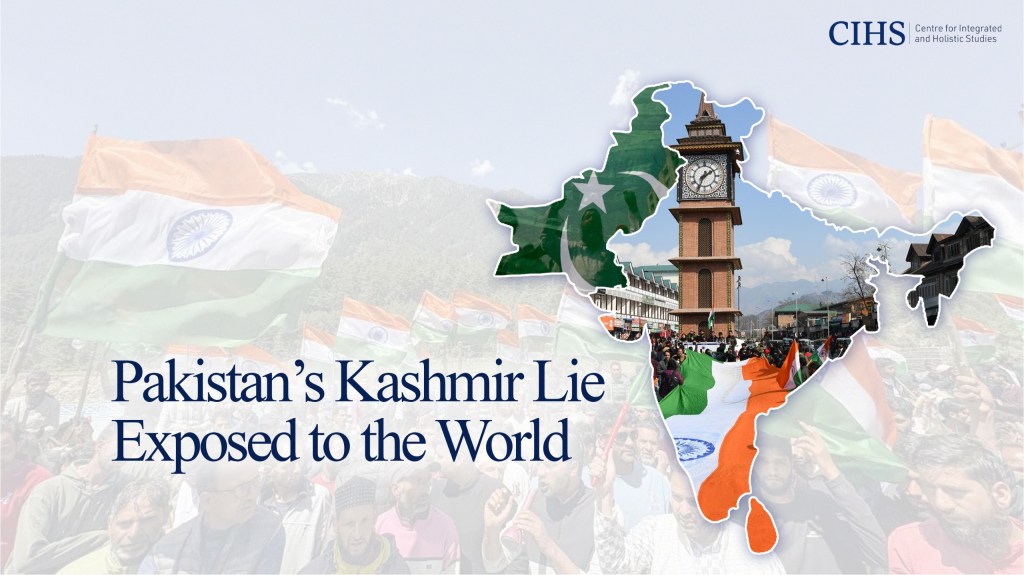
Pakistan aggressed into Jammu and Kashmir through tribal raiders supported by the Pakistan Army, forcibly invaded the region in 1947. The invasion resulted in massacres, widespread displacement and the illegal dismemberment of a historically unified territory. Rather than being “liberated,” Gilgit-Baltistan and Pakistan-occupied Jammu and Kashmir, including parts of China Occupied Ladakh territories and areas across the Line of Control, were seized by force and remain under army control to this day.
However, Pakistan observance of Kashmir Solidarity Day on February 5th each year has evolved into one of the most calculated propaganda exercises in world geopolitics, far from a sincere show of care for the people of Jammu and Kashmir. To portray 5th February as a sign of “solidarity” is actually a mockery of Jammu and Kashmir’s more than seven-decade-long struggle against Pakistan’s illegal occupation, manipulation, sponsorship of terror and ongoing atrocities in the area.
The day has no organic roots in Jammu and Kashmir’s history, resistance or public sentiment. It was neither born out of a people’s movement nor linked to any significant milestone in Jammu and Kashmir. Instead, it is a state-sponsored narrative manufactured by Pakistan to internationalise and to deflect attention from its occupied terrorises and its terrorism in the region.
This manipulation reached a troubling point in 2021 when the New York State Assembly passed a resolution urging the Governor to recognise 5th February as Kashmir American Day. Of all possible dates relevant to Kashmir, the choice of Pakistan’s Kashmir Solidarity Day was deeply ironic and offensive. It was akin to asking a perpetrator to define justice.
Such decisions reflect the influence of Pakistan’s sustained propaganda campaign. By exporting a False narrative, Pakistan has been influencing international forums and institutions to adopt narratives and language that align with its interests, not with Jammu, Kashmir and Ladakh realities. This appropriation insults the people of India specially Jammu and Kashmir, who have consistently rejected Pakistan’s ideology and interference. People of Jammu and Kashmir do not observe or identify with 5th February; instead, they see it as a reminder of the Pakistan forceful occupation of its territories.
Pakistan’s involvement in Jammu and Kashmir has been marked by terror and extremism from the very beginning. Whether it is the Mirpur Massacre of 1947, or the massacre of Kashmiri Hindus in 1990, or be it a Chattisinghpura massacre of 2000, which stand as grim reminders of the brutality unleashed by Pakistan- since 1947. Yet international bodies that today echo Pakistan’s rhetoric have historically failed to acknowledge or address these crimes. This selective outrage raises serious questions about the misuse of human rights.
The situation in Gilgit Baltistan further exposes the hollowness of Pakistan’s claims. In the name of development and integration, the region has witnessed poverty, illiteracy, demographic manipulation and systematic denial of basic human rights. Residents of Gilgit Baltistan lack constitutional protection, political representation and control over their resources. This reality starkly contrasts with Pakistan’s loud claims of standing for Jammu and Kashmir welfare.
Pakistan’s obsession with internationalising Jammu and Kashmir has also served as a distraction from its internal crises. Pakistan, a terror hub struggling under massive global debt, economic instability and governance failures, continues to knock on international doors to sell false narratives rather than addressing its own domestic challenges. When ceasefire violations, infiltration attempts, and cross-border terrorism failed to achieve strategic objectives, Pakistan turned to diplomatic theatrics and propaganda resolutions.
On the other hand, the contrast across the Line of Control is evident. Jammu and Kashmir, an integral part of India, is witnessing development, infrastructure growth, democratic participation and improved security conditions.
Legally and constitutionally, the case is unambiguous. The accession of the princely state of Jammu and Kashmir to India in 1947, including the illegally occupied territories of Jammu and Kashmir by Pakistan, was lawful and final, completely excluding Pakistan. Pakistan’s presence in illegally-occupied Gilgit-Baltistan and Pakistan-occupied Jammu and Kashmir is forceful and sustained only through army control and suppression. Attempts to internationalise Jammu and Kashmir internal sovereign through the United Nations have consistently failed because it lacks legal merit.
India, as a responsible and rising global power, has shown remarkable restraint despite repeated provocations. However, it cannot and will not tolerate interference in its internal affairs. Jammu and Kashmir is an integral and inalienable part of India, culturally, historically and legally. India celebrates its oneness, including the rich culture of Jammu and Kashmir and remains committed to peace, development and dignity for all its people.
In this context, Pakistan’s propaganda day on 5th February is more symbolic of its illegal occupation and misleading. True solidarity with Jammu and Kashmir would begin with acknowledging Pakistan’s role in terrorism, exploitation and acknowledging its illegal occupation rather than amplifying a narrative designed to conceal it.
(Author Vivek Raina is Manager Outreach & Dissemination at Centre for Integrated and Holistic Studies (CIHS)
 CIHS - Centre for Integrated and Holistic Studies