

Today’s terrorists embrace “propaganda by the deed,” a concept born in 19th-century Europe when anarchist thinkers such as Carlo Pisacane, Mikhail Bakunin and Peter Kropotkin argued that spectacular acts of violence themselves served as messages and catalysts for broader ideological objectives.
Rahul Pawa
The September 11, 2001 attacks were a grim watershed, but they neither marked the start nor the end of terrorism; rather, they represented one more entry in a long global ledger of terrorist violence. Beyond 9/11, terrorism has mutated, proliferated, and been repeatedly recast as an open battle of ideologies beyond borders. From 1985 Air India plane bombing to the London Underground bombings in 2005, 2008 Mumbai terrorist attacks and Paris rampage of 2015, to Hamas’s inhumane October 7, 2023 attacks on Israel, terrorism has taken many forms. Across Europe, lone-actor knife assaults have become a grim pattern. In India, the brutal assault on Hindu tourists in Pahalgam highlights the persistence of deeply rooted Jihadist radicalisation beyond its borders. Together, these incidents show how terrorism and extremist violence endure in varied forms. Each act of terror, different in method but united in intent, highlighting a global pattern of ideologically fuelled violence designed to terrify, recruit, and destabilise societies.
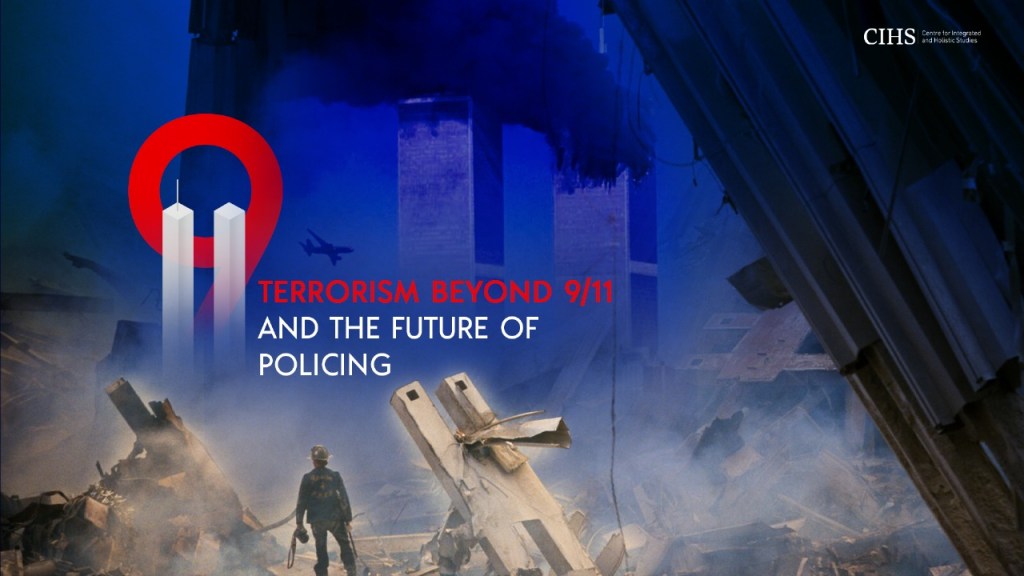
Today’s terrorists embrace “propaganda by the deed,” a concept born in 19th-century Europe when anarchist thinkers such as Carlo Pisacane, Mikhail Bakunin and Peter Kropotkin argued that spectacular acts of violence themselves served as messages and catalysts for broader ideological objectives. Back then it was associated mainly with far-left anarchists, who used assassinations and bombings to dramatise their grievances. By late 20th and early 21st centuries Jihadist groups refined the practice for a global audience. These perpetrators are less concerned with seizing territory than with winning hearts, minds, or vengeance in an ideological war. Long before 9/11, terrorism had already gone global. In later half of the twentieth century, 1985 Air India plane bombing by Khalistani extremists killed 329 people and showed how terrorists could project violence far beyond their home base. Two decades later, Al-Qaeda inspired July 2005 London bombings, when four British-born suicide attackers detonated backpack bombs on three underground trains and a bus, killing 52 commuters and injuring more than 700, Britain’s worst terror attack in decades and its first encounter with Jihadist suicide terrorism. Three years after London, Pakistan-based Lashkar-e-Taiba struck India with 2008 Mumbai attacks, a three-day siege of hotels, train stations and a Jewish centre that killed 166 people and demonstrated how global Jihadist terrorism could hit India’s financial hub. Close to a decade later, Islamic State (ISIS) showcased the reach of transnational terrorism with the November 2015 Paris attacks, coordinated shootings and bombings at a concert hall, cafés and a stadium that left 130 people dead and hundreds more injured. Since then and before, across Europe, lone-actor knife assaults have become a grim pattern, signalling the shift from centrally directed plots to decentralised violence. In October 2023, terror outfit Hamas launched its inhumane assault on Israel, combining low-tech infiltration with high-tech weaponry; bulldozers, paragliders, drones and thousands of rockets, overwhelming one of the world’s most sophisticated security systems and killing more than 1200 people and over 250 were taken hostage. Less than two years later, April 2025 Pahalgam massacre of Hindu tourists in Jammu and Kashmir echoed this pattern, carried out by a Lashkar-linked proxy group using encrypted communications and western weaponry. Taken together, modern day terrorist attacks reveal a globalised, tech-savvy, ideologically driven terrorism. Threats that neither respect borders nor fit neatly into traditional counter-terrorism doctrines, forcing governments to rethink how they police and pre-empt terrorist plots in the twenty-first century.
Across Europe, lone-acting knife attacks have become a grim hallmark of modern terrorism, signalling a shift from centrally directed plots to decentralised violence. Low-tech so called “lone wolves”, often inspired by jihadist propaganda or supported by small cells acting as virtual “help desks”, arm themselves with knives, hatchets or even trucks to kill unsuspecting civilians. Cities such as London, Paris, Nice, Berlin and Vienna have endured a string of these “do-it-yourself” or DIY attacks, from stabbings on crowded streets to vehicles ploughing into pedestrians, mostly claimed in the name of ISIS. A 2017 study of jihadist incidents in the West counted dozens of such terrorist assaults, ranging from major operations like Paris 2015 to far less sophisticated but still lethal acts by single attackers. The ease of turning everyday objects into weapons makes these plots hard to predict but deadly in execution. Their perpetrators aim to prove that no level of policing can fully stop the “guerrilla at home” a chilling message that even ordinary urban life can be punctured by terror.
Evidentiary to the reality that today’s extremist and terrorist violence is fundamentally ideological and technologically exposed. More so, it represents “battles of ideologies rather than nations” as technologies enable borderless access to the world. Today’s terrorist groups and actors project a fight over beliefs, religion, race, political doctrine using violence as theatre to publicise their cause. These actors commit atrocities both to intimidate and to inspire: each terrorist attack is meant to rally the ‘faithful‘ and terrorise the ‘enemy‘ by example, much like writings of Pisacane and others. Crucially, these ideologies cut across borders. Jihadist extremism (the jihadist ideology espoused by Al-Qaeda, ISIS, LeT and JeM and their offshoots) regards the world as a cosmic battlefield between believers and infidels, fueling attacks not only against Western nations but also against religious minorities. For instance, jihadists have targeted Hindus and Jewish communities in brutal acts of Hindu-Hate and anti-Semitic terrorism; from the 2012 Toulouse school shooting to the assault on Hindu tourists in 2025, and beyond. Whether the assailant swears allegiance to ISIS, LeT, JeM or Hamas, the pattern is comparable: a terrorist worldview justifying the murder of innocents (Jews, Hindus, Christians or others) as a divine or ideological duty.
At the other end of the spectrum, far-left terrorism has also lingered beyond the Cold War era. Marxist-Leninist insurgencies and anarchist cells continue to wage violence. In South Asia, Maoist terrorists, motivated by far-left ideology, have kept up a decades-long violence means to seek ideological objectives. India’s Maoist Naxalites, for example, described as the country’s gravest internal security threat; at their peak in the late 2000s, killed roughly 700 people per year on average, including civilians and security personal. Leftist terrorists, much like jihadists, see violence as a legitimate tool to strike at a system they deem, another front in the ideological war.
Tragically, no community is beyond the crosshairs. In recent years, anti-Hindu persecution has flared in parts of United States, Canada, UK, and Europe under the banner of Khalistani extremism. For example, November 3, 2024, Khalistani extremists, linked to Pakistan-backed security and army outfits attacked Hindus temple attendees at the Hindu Sabha Mandir in Brampton, Canada, and disrupted a consular event. Simply “based on their religion, and country of descent”. Similarly, a surge of violence in neighbouring Bangladesh, as hardline Jihadist groups rallied supporters by demonising Hindus amidst political upheaval. These incidents highlight how ideological terror feeds off sectarian hatred: whether it’s Khalistani extremists attacking Hindus in Canada, Jihadi’s attacking Hindus in Bangladesh or Anti-semites attacking Jews in America, the common thread is a poisonous belief that certain people are legitimate targets due to their identity or faith.
Even as terrorism today transcends nationality, certain epicentres and state actors help incubate and export violent ideologies. The Islamic Republic of Pakistan is frequently cited as a prime example. For decades, Pakistan’s soil has harboured numerous terrorist organizations, some aimed at rival India or Afghanistan, others with global ambitions. From the planners of 9/11 and the 2008 Mumbai attacks, to the Al-Qaida leadership including Osama Bin Ladin himself, many terror actors found shelter or support in Pakistan’s territory (often with the complicity of elements of its Army and security services). It is little wonder that Indian officials routinely describe Pakistan as “the epicentre of terrorism”, a charge echoed by global observers in light of Pakistan’s long history of abetting cross-border terrorism. In mid-2025, after the Pahalgam massacre of Hindu tourists, India’s foreign ministry asserted that the “epicentre of terrorism lies across the border in Pakistan”, highlighting that jihadi attacks on Indian civilians were traced back to Pakistani soil. This alignment of a state with terrorist proxies shows how nations can fuel ideological battles for geopolitical ends, blurring the line between insurgency and undeclared war.
Another notable hub is Erdogan’s Turkey, which under President Recep Tayyip Erdogan has tilted toward an increasingly Jihadist posture. Turkey is a NATO member, yet its leadership openly courts Jihadist movements: from providing safe haven to exiled Muslim Brotherhood figures to championing the terrorist group Hamas. Erdogan has publicly stated that “Hamas is not a terrorist organization… [but] a liberation group, mujahideen,” a stance no other NATO leader shares. Over the past decade, Turkey has been accused of a “double game”: cracking down on some terror networks while tolerating or even enabling others that serve its political narrative. For instance, intelligence findings reported that Turkish authorities allowed or overlooked jihadist fighters traversing its borders during the Syrian civil war, and even intercepted shipments have revealed explosives and weapons flowing from Turkey to terrorist groups in Gaza. Erdogan’s government has turned Turkey into a financial and logistical hub for Hamas, according to counter terror analysts, and has embraced virulent anti-Western and anti-Semitic rhetoric domestically. This “hyper-Jihadist” turn in Ankara means that a key regional player is, in effect, propagating the ideological war, calling for an Islamic “jihad” coalition against Israel in 2023, for example, and giving Jihadist hardliners political cover. Such state-level sponsorship or tolerance of terrorism and extremism greatly complicates global counterterrorism efforts. It creates sanctuaries where terrorists can regroup and ideologies can be broadcast with impunity.
Faced with amorphous transnational threats, the future of policing lies in agility, intelligence, and partnership. The experience of the last two decades has shown that traditional law enforcement must evolve into a more proactive, intelligence-driven force to thwart plots before the fact. This means deeper integration between police and intelligence agencies, both within and across countries. After 9/11 and subsequent attacks, many nations set up fusion centers and joint task forces to ensure that local police could tap national security information and vice versa. In Europe, failures preceding attacks like Paris 2015 (where some suspects crossed borders under the radar) spurred better data-sharing among EU security services. Police now recognise that a radicalised individual’s online footprint might be as important as physical clues, leading departments to invest in monitoring extremist propaganda on social media and the dark web, albeit within legal and privacy constraints. Technology will be a double-edged sword in this arena. On one hand, police are adopting advanced tools: artificial intelligence to scan for warning signs of terror plots, algorithms to analyze travel and financial records for patterns, and surveillance cameras with facial recognition to track suspects. These can vastly enhance preventative policing. Yet the same tech empowers terrorists too, encrypted communications, drone weaponisation, and cyber recruitment are new fronts requiring police adaptation. According to strategic forecasts, terrorists will continue to innovate and surprise, using the Internet to recruit and plot, which demands that counterterrorism professionals use equal imagination to anticipate threats and “close doors” before attacks occur
Crucially, the consensus among security experts is that heavy-handed military solutions alone are insufficient going forward. The coming years will see a relative shift from the battlefield to the beat: local and national police, rather than armies, will carry the primary responsibility for combating terror day-to-day. In the United States and Europe, for example, the focus is increasingly on “civilian security and law enforcement” as the main line of defense, especially against homegrown or lone-wolf extremists. Military force may stop insurgencies, but preventing attacks at home relies on good policing; from counter radicalisation, to quick-response tactical teams that can neutralize an active terror incident. The “war on terror” is gradually morphing into “policing terror,” a sustained security mission more akin to crime-fighting, albeit against unusually fanatical criminals. This means law enforcement agencies must be well-resourced, trained, and networked. If democracies invest smartly in policing, intelligence, and prevention, there is hope that terrorism can be “reduced to a level” where it is manageable by governments. In effect, making terrorist violence rarer and less impactful than it has been in this tumultuous post-9/11 period.
However, terrorism beyond 9/11 has proven to be a protean, persistent menace, an endless fight of ideas that respects no truce or border. The adversaries are scattered and the motivations diverse: Jihadist terrorists, far-left extremists, and more, all convinced of the righteousness of their deadly cause. We live in an age where a social media post can radicalise a person thousands of miles away into murdering his neighbours, and where a bomb in one country can reverberate as propaganda in another. For policing and security services, the mission is therefore as psychological and social as it is physical. They must not only protect crowds and harden targets, but also undermine the narratives that fuel extremist violence. This involves close cooperation with educators, tech companies, community leaders to intervene in the extremism cycle.
Policing in the future will require walking a tightrope: using cutting-edge methods to detect and disrupt plots while upholding the open, pluralistic values that terrorists aim to destroy. It means anticipating new threats, be it bio-terror, AI-driven disinformation campaigns, or attacks in the metaverse, before they materialise. And it means acknowledging that as long as powerful ideologies of hate persist, absolute victory may be elusive. Instead, the realistic goal is resilience: to so degrade and contain terrorist networks that they become ineffectual, and to strengthen societies so that even when attacks occur, they unite rather than fracture. In this protracted struggle, every police officer, intelligence analyst, and alert citizen becomes a responder on the home front. World has learned, since 9/11, that vigilance cannot relax; but it has also learned that adaptation is possible. With smarter policing, international solidarity, and a commitment to addressing the roots of extremist ideologies, the hope is that the horrifying specter of terrorism will slowly recede from daily life. The fight is far from over, but the balance can shift, turning the tide against terror, one foiled plot and one less recruit at a time.
(Rahul Pawa is director, research at New Delhi based think tank Centre for Integrated and Holistic Studies)
 CIHS - Centre for Integrated and Holistic Studies